The relationship between water and blood glucose is real, but it is not the same as taking insulin or an oral diabetes medication. This guide gives you exact daily cup targets, the physiology behind them, and the situations where drinking extra water can backfire.
Most adults with elevated blood sugar should aim for roughly 9 to 13 cups (about 2.1 to 3 L) of unsweetened fluids per day — the beverage portion of the National Academies' total-water targets. Water does not drop glucose the way insulin does; it prevents dehydration-driven rises and helps the kidneys clear extra sugar once blood glucose exceeds about 180 mg/dL.
- Your Hydration & Blood Sugar Checklist
- Can Water Actually Lower Blood Glucose?
- Exact Daily Hydration Targets
- A 3-Step Routine to Hit Your Water Goal
- 2 Blood Sugar Checks That Separate Cause From Effect
- When Extra Water Is Dangerous
- Adjusting the Amount for Your Situation
- Common Questions About Water and Blood Sugar
Your Hydration & Blood Sugar Checklist
A practical water plan for glucose control starts with the numbers you can actually use each day. Work through these seven items in order:
The goal is not to flood your system with abnormally large volumes. In fact, rapid ingestion of several liters in a short window can dilute sodium and, in rare cases, trigger confusion or seizures. A spread-out pattern of 9 to 13 cups across waking hours is what most metabolic research supports, not a single heroic bottle.
Can Water Actually Lower Blood Glucose? The Mechanism, In Plain Terms
Strictly speaking, water is not a blood-sugar-lowering agent. It does not trigger insulin release, it does not mimic GLP-1, and it does not force glucose into muscle cells the way physical activity does. What water does is remove physiological barriers that keep glucose higher than it needs to be.
Water is not a diabetes medication. It is the physiological environment in which your own insulin and diabetes medication work best.
The first barrier is dehydration itself. When your body is low on water, blood plasma becomes more concentrated — the same glucose concentration now sits in a smaller fluid volume, which pushes lab readings upward. At the same time, the brain's pituitary gland releases more vasopressin, the anti-diuretic hormone. Vasopressin tells the kidneys to conserve water, but it also signals the liver to release stored glucose. Chronic underhydration is therefore not a benign state; it nudges glucose production upward while simultaneously reducing the body's ability to dilute and process what is already there.
The second mechanism involves renal glucose excretion. Healthy kidneys reabsorb almost all filtered glucose, but the transport proteins responsible for that reabsorption become saturated when blood glucose exceeds roughly 180 to 200 mg/dL. Above that threshold, glucose "spills" into the urine. That spill requires urine volume — if you are dehydrated, the kidneys produce concentrated, low-volume urine, which limits how much excess glucose can leave through this route. Adequate water keeps urine output robust enough to make glucose excretion part of your body's safety valve.
A third effect is more indirect but clinically meaningful: hydration status influences insulin sensitivity in adipose and muscle tissue. Even mild dehydration has been associated with higher fasting glucose and a greater insulin response to the same carbohydrate load. That does not mean water is a substitute for metformin, insulin, or dietary carbohydrate control — but a person who is consistently underhydrated may need more medication to achieve the same glucose result as a well-hydrated person.
Exact Daily Hydration Targets: Cups, Liters, and Caveats
The closest thing to an official baseline comes from the National Academies of Sciences, Engineering, and Medicine (NASEM), which sets Adequate Intake (AI) values for total water — the water from beverages, drinking water, and food combined.[1] For adults, about 20% of that total typically comes from food, so the beverage portions below are the more useful numbers for daily planning.
| Group | Total Water Per Day (All Sources) | From Beverages & Plain Water | Practical Fluid Goal |
|---|---|---|---|
| Adult women (19+ years) | 11.5 cups (2.7 L) | ≈ 9 cups (2.2 L) | Eight 8 oz glasses + 2 extra cups |
| Adult men (19+ years) | 15.5 cups (3.7 L) | ≈ 13 cups (3.0 L) | Ten 8 oz glasses + 3 extra cups |
| Diabetes with frequent hyperglycemia (>180 mg/dL) | NASEM baseline plus an extra 1–2 cups if urine is dark | Add 8–16 oz spread over the next 2–3 hours | Aim for pale-yellow urine |
| Older adults (65+) | Use scheduled drinking, not thirst alone | Same baseline unless medically restricted | Older thirst sensation is often blunted |
| Adults on fluid restriction* | Follow your clinician's exact prescribed volume. General "more water" targets no longer apply. | ||
*Fluid restriction is common in advanced heart failure, end-stage kidney disease on dialysis, and certain liver or hyponatremia conditions.
The American Diabetes Association's lifestyle guidance encourages unsweetened beverages — especially water — as the default fluid choice. The ADA does not set a single liters-per-day number because medication type, kidney function, sweat losses, and comorbidities change the optimal volume for each person.[2]
If you remember one simplified rule: drink about half your body weight in ounces of unsweetened fluid daily, then adjust for heat and activity. A 180 lb person would start near 90 oz (about 2.7 L), which lands comfortably inside the ranges above for most adults. This rule is a clinical shortcut, not an official guideline, but it is a useful way to personalize the NASEM targets.
The classic "8×8 rule" — eight 8 oz glasses of water per day — is a reasonable floor, not an optimal target. It delivers 64 oz (1.9 L), which is close to the female beverage goal but below the male goal. If you have diabetes, plan around the 9–13 cup beverage range, not the lower 64 oz minimum.
The 3-Step Routine That Turns 9–13 Cups Into a Habit
Knowing the number is easy; drinking it consistently is the real intervention. This routine takes about 30 seconds of planning per day and removes the need to "remember" to hydrate.
People who set phone or smartwatch reminders for the first week typically internalize the rhythm by day ten. After that, thirst and urine color provide enough feedback that tracking apps become unnecessary. For older adults, scheduled drinking matters even more because the thirst center in the aging brain responds more slowly to rising plasma osmolality.
Two Blood Sugar Checks That Show What Water Can and Can't Do
If you want to see the hydration-glucose relationship in your own body, you can run two simple self-monitoring experiments. Both require you to keep your meals, medications, and activity constant so the only variable is fluid intake.
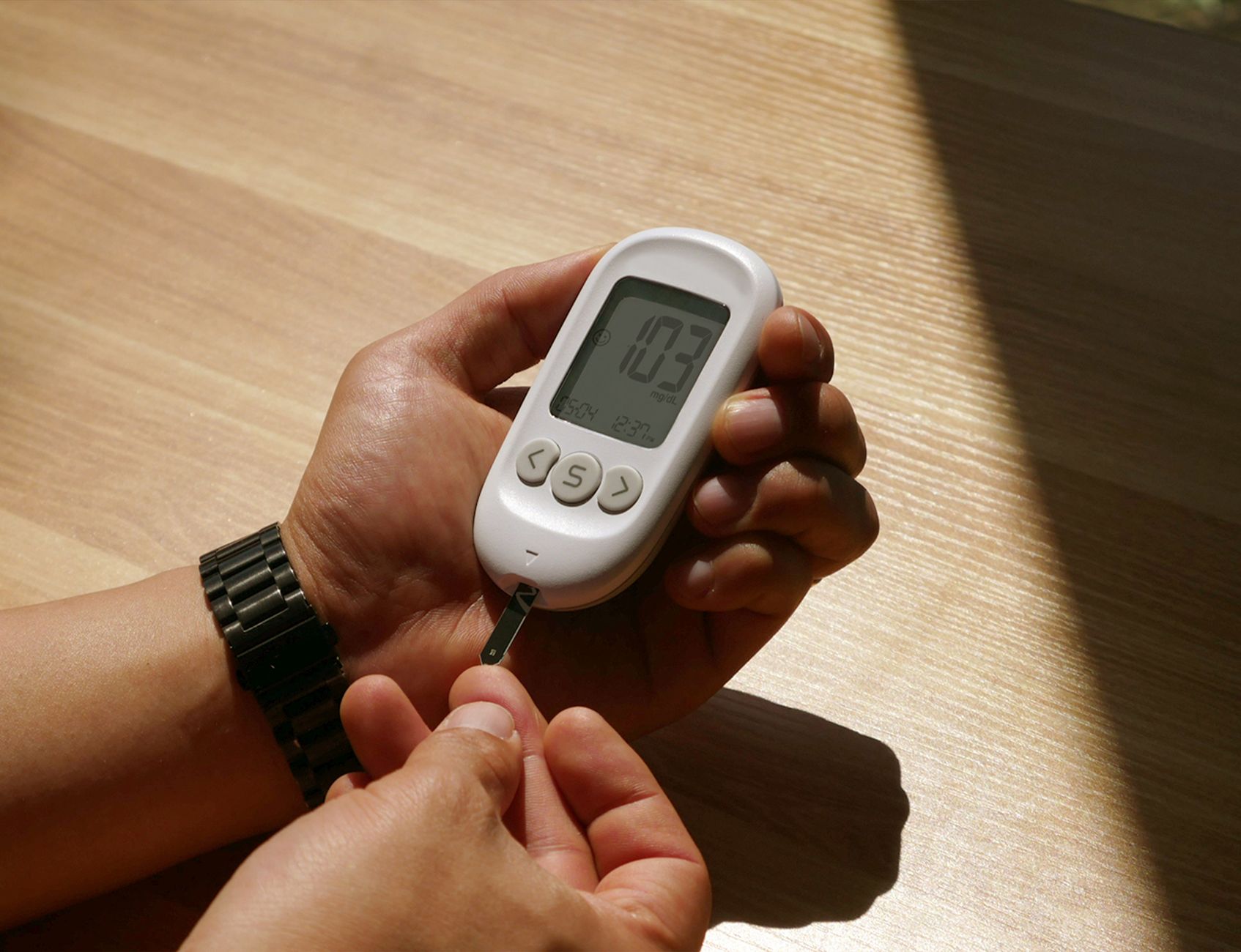
Check 1: The dehydration correction test. Choose a day when your glucose is elevated after a 2–3 hour fast and your urine is dark amber — both signs you are mildly behind on fluids. Drink 16–24 oz (about 500–700 mL) of plain water over 10 minutes. Wait 30–45 minutes and recheck glucose. Many people see a modest drop (5–20 mg/dL) because the water expands plasma volume and allows the kidneys to clear some excess glucose. You will not see an insulin-like plunge, and if you do, the change was probably unrelated to water.
Check 2: The 3-day hydration audit. Keep two columns for three days: total unsweetened fluids consumed and your fasting glucose the next morning. Keep food identical across the three days if you can. Most people find that the morning after a genuinely well-hydrated day, fasting glucose runs a few points lower than the morning after a dehydrated day. The effect is smaller than dietary changes or medication adjustments, but it is often visible — and it provides personalized motivation to stay hydrated.
Hydration is a modifier, not a primary treatment. If your blood sugar is running 80–100 mg/dL above goal, water alone will not close that gap. If you are dehydrated and your glucose is 20–40 mg/dL above your norm, correcting that dehydration can be a legitimate part of the solution.
When Extra Water Is Dangerous: Not Everyone Should Increase Fluids
Telling a person with diabetes to "just drink more water" becomes medically harmful in several specific situations. The kidneys are powerful filters, but they are not invincible, and certain conditions require deliberate fluid restriction.
Symptoms that warrant urgent evaluation with high glucose and dehydration include vomiting for more than a few hours, inability to keep fluids down, deep rapid breathing, fruity breath odor, or confusion. These point to DKA or hyperosmolar hyperglycemic state — conditions that require emergency care, not a water bottle. The CDC reports that diabetes affects tens of millions of Americans, and emergency hyperglycemia complications remain a major cause of preventable hospitalizations.[3]
Adjusting the Amount: Situations That Change the Math
A single water target for every person with diabetes would be as ineffective as a single insulin dose for every person with diabetes. Several common scenarios shift the number up or down:
| Situation | How It Affects Hydration | Adjustment |
|---|---|---|
| Taking an SGLT2 inhibitor (canagliflozin, dapagliflozin, empagliflozin) | These drugs lower glucose by increasing urinary glucose excretion, which increases urine output and fluid loss | Stay at the higher end of the beverage target (10–13 cups daily); increase extra fluid on hot days or after exercise |
| Taking a diuretic for blood pressure or heart failure | Diuretics increase sodium and water loss; some also affect potassium | Follow your clinician's fluid advice; urine color is more reliable than thirst |
| Adults 65+ living independently | Thirst sensation decreases with age; kidney concentrating ability declines | Do not rely on thirst — schedule 8 oz with each meal and 4 oz between meals |
| Recurrent kidney stones | Higher urine volume dilutes stone-forming minerals | Many nephrologists recommend 2.5–3 L total urine output per day, which usually requires 3–3.5 L of fluid intake |
| Hot climate or physically demanding job | Sweat losses can reach 1–2 L per hour in extreme heat | Weigh yourself before and after work shifts; replace each pound of sweat loss with about 16–20 oz of fluid |
| High-dose insulin requiring correction doses | Fluid needs are normal, but glucose swings are driven by insulin timing, not hydration | Use water as supportive care, not as a substitute for titration |
The takeaway from this table is simple: your hydration plan should be reassessed whenever your medication list changes. Adding an SGLT2 inhibitor without increasing fluids is one of the more common reasons patients develop dizziness, constipation, or recurrent urinary tract infections. Adding a diuretic without careful fluid monitoring can push the opposite direction — too little volume for adequate kidney perfusion.
FAQ: Common Questions About How Much Water Lowers Blood Sugar
Will drinking 2–3 liters of water "flush out" blood sugar?
Partially, but only when glucose is already above the kidney threshold (about 180 mg/dL). Below that threshold, your kidneys reabsorb nearly all filtered glucose, so extra water has little flushing effect. Above it, glucose spills into urine, and adequate urine volume makes that spill more efficient. That mechanism is real but limited: the kidneys can excrete perhaps 50–100 g of glucose per day at very high blood sugar levels, far less than a typical meal delivers. Water supports glucose clearance; insulin and medication do the main work.
How long after drinking water does blood sugar go down?
There is no fixed timeline because water does not activate a glucose-lowering pathway like insulin. If dehydration was pushing glucose up, you may see a modest improvement within 30–60 minutes as plasma volume expands. Water's larger benefit is chronic: consistent daily hydration keeps vasopressin levels lower and helps insulin work efficiently around the clock. That effect becomes visible over days, not minutes.
Does cold water lower blood sugar faster than warm water?
No. Water temperature does not meaningfully change glucose metabolism. Some people drink cold water more readily and therefore hydrate better, which is a valid practical reason to prefer it. If anything, very cold water can slow gastric emptying slightly when consumed with a meal, but the effect is small enough that you should simply choose the temperature that helps you drink consistently.
Is it safer to drink sports drinks when blood sugar is high?
No. Standard sports drinks contain 6–8% carbohydrate and will raise blood glucose, which is the opposite of what you want. If your glucose is above 180 mg/dL and you need rehydration after exercise, plain water is the safer choice. If you have been sweating heavily for more than an hour and need electrolytes, choose an electrolyte product labeled sugar-free and verify the carbohydrate content on the label.
What if my blood sugar is above 250 mg/dL and I have type 1 diabetes?
Drink a normal glass of water to address dehydration, but check urine or blood ketones before doing anything else. If ketones are moderate or large, do not exercise — physical activity can worsen ketosis — and contact your diabetes care team immediately. Water is an adjunct, not the treatment, for hyperglycemia with ketones.
- Target the National Academies' beverage goals: about 9 cups per day for women and 13 cups per day for men, mostly from unsweetened fluids.[1]
- Water does not lower blood glucose like insulin or oral diabetes medication; it prevents dehydration-driven glucose elevation and improves the body's ability to excrete excess glucose above roughly 180 mg/dL.
- Use urine color as your daily biofeedback tool — pale yellow is the goal, dark amber means you need an extra glass soon.
- The ADA's 2026 nutrition guidance supports water as the default unsweetened beverage but does not prescribe one universal volume; individual kidney function, medications, and activity all change the number.[2]
- Drinking extra water is not always safe: people with advanced kidney disease, heart failure, or DKA may need to restrict fluids or seek emergency care instead.
- Hydration conversations should happen at every medication change — especially when starting an SGLT2 inhibitor or a diuretic.
- National Academies of Sciences, Engineering, and Medicine. Dietary Reference Intakes for Water, Potassium, Sodium, Chloride, and Sulfate. National Academies Press, 2005.
- American Diabetes Association. Standards of Care in Diabetes — 2026. Diabetes Care, 2026.
- Centers for Disease Control and Prevention. National Diabetes Statistics Report. www.cdc.gov