Honey is often called the "natural" sweetener — but your pancreas doesn't read marketing copy. For people with diabetes, the real question isn't whether honey is natural; it's whether honey fits your carbohydrate budget. The honest answer: yes, in small, measured amounts, with meaningful caveats around portion, pairing, and glucose control.
Yes — honey can be safe for most people with diabetes, but only in small, measured amounts counted into your carbohydrate budget. One tablespoon has about 64 calories and 17.3 grams of carbohydrate, nearly all glucose and fructose [1]. Its glycemic index is lower than table sugar's, yet it still raises blood glucose. Treat honey as a sweetener, not a free food.
- What the Evidence Really Shows About Honey and Blood Sugar
- Honey vs. Sugar: How Do They Compare for Diabetes?
- The Five Factors That Decide Whether Honey Is Safe for You
- How to Use Honey Safely, If You Choose To
- Does Raw Honey or Manuka Honey Matter?
- When Honey Is Not Worth the Risk
- Frequently Asked Questions About Honey and Diabetes
What the Evidence Really Shows About Honey and Blood Sugar
Honey is not "free" sugar. That single sentence is the most useful takeaway for anyone with diabetes weighing a jar of wildflower honey against a bag of white sugar. Honey is roughly 80% carbohydrate by weight, and its two main sugars — glucose and fructose — reach the bloodstream quickly. Glucose is absorbed directly through the gut and appears in circulation within minutes. Fructose must first be converted in the liver, but in a spoonful of honey both sugars arrive fast enough to produce a measurable blood glucose rise within 30 to 60 minutes.
Honey's glycemic index (GI), a number that estimates how quickly a carbohydrate-containing food raises blood glucose, is usually reported between 50 and 58 depending on the floral source. That is modestly lower than refined table sugar, which lands near 65. It is a real difference, but a smaller practical one than the health-food aisle suggests: a lower GI means a somewhat slower rise, not a canceled rise. For a person with a fasting glucose already above target, 10 grams of honey can still shift glucose substantially.
The honey-as-medicine narrative is built on polyphenols, flavonoids, and trace minerals. Honey does have measurable antioxidant and mild antimicrobial activity in laboratory settings. The problem is arithmetic: to get a meaningful concentration of those compounds, you would need to eat far more honey than a diabetes meal plan can absorb. You would be delivering the plant compounds together with a large sugar load — and the sugar dominates the metabolic outcome.
Guidance from the American Diabetes Association is straightforward on this point. The 2026 Standards of Care in Diabetes [2] don't ban honey specifically; they treat added sugars of any source — including honey, maple syrup, and agave — as foods to minimize and to fit inside an individualized carbohydrate budget. In other words, honey earns a place at the table only if something else carbohydrate-heavy leaves it.
No honey variety — raw, manuka, acacia, or creamed — has ever been shown to lower blood glucose or treat diabetes itself. Claims that honey "reverses" insulin resistance or substitutes for diabetes medication are not supported by guideline-level evidence.
Honey vs. Sugar: How Do They Compare for Diabetes?
Measure for measure, honey is actually more carbohydrate-dense than table sugar. One tablespoon of honey contains roughly 64 calories and 17.3 grams of carbohydrate, while a tablespoon of white sugar provides about 48 calories and 12.6 grams [1]. That surprising difference appears because honey is denser — beyond its sugars, it holds a small amount of water, which makes each spoonful heavier. The practical catch is sweetness: honey tastes sweeter than sugar, roughly 1.1 to 1.5 times sweeter depending on variety, so you may legitimately use less.
Per 1 tbsp: ~64 calories, ~17.3 g carbs
GI: 50–58
Sweetness: sweeter than sugar
Extras: trace minerals, polyphenols
Per 1 tbsp: ~48 calories, ~12.6 g carbs
GI: ~65
Sweetness: baseline
Extras: none
The glycemic comparison also favors honey slightly. Glycemic index tables compiled by the University of Sydney's International Glycemic Index Database put honey in the 50–58 range and white table sugar near 65 [3]. But the difference narrows further once honey is spread across a meal, mixed into coffee, or spooned over oats. Total carbohydrate, not the GI number, remains the strongest driver of post-meal glucose for most people with diabetes.
| Attribute | Honey (1 tbsp) | Table Sugar (1 tbsp) |
|---|---|---|
| Calories | ~64 | ~48 |
| Carbohydrates | ~17.3 g | ~12.6 g |
| Glycemic index | 50–58 | ~65 |
| Primary sugars | Glucose + fructose | Sucrose (50% glucose, 50% fructose) |
| Sweetness vs. sugar | About 1.1–1.5× sweeter | Baseline |
| Micronutrients | Trace potassium, calcium, zinc | None |
| Antioxidant activity | Present, higher in dark/raw honeys | None |
Honey and table sugar are closer than the food labels suggest. Choosing honey because you prefer the taste or want trace antioxidants is reasonable. Choosing it because you think it "doesn't count" is where the trouble begins. Budget honey exactly as you would sugar: as a measured carbohydrate.
The Five Factors That Decide Whether Honey Is Safe for You
Whether honey is safe for you is not a property of the honey itself — it is a product of your glucose control, your medications, and the food surrounding that spoonful. The same drizzle can cause a 60-point glucose spike in one person and barely register in another.
1. Your baseline glycemic control. A person with an A1C above 9% or frequent fasting readings above 160 mg/dL has little room for concentrated sugars. In that context, honey delivers calories and glucose with no therapeutic benefit; the risk of compounding an already unstable pattern outweighs any flavor reward.
2. The portion size. A single teaspoon of honey (about 5.7 grams of carbohydrate) is a different physiological event than a 2-tablespoon serving (about 34 grams of carbohydrate, nearly two carbohydrate exchanges). If you are going to use honey, the difference between "a drizzle" and "a pour" can be the difference between a blip and a spike.
3. What it is paired with. Honey eaten alone on an empty stomach hits fast. Honey combined with Greek yogurt, nuts, whole-grain toast, or cottage cheese lands more gently, because protein, fat, and fiber slow gastric emptying and blunt the glucose rise. Pairing doesn't erase the carbohydrate — it stretches the response over a longer window.
4. The floral source and processing. Dark honeys such as buckwheat and manuka tend to carry more polyphenols, and some varieties show slightly lower glycemic index values than light acacia honey. These differences are real but small. No variety gives you a license to ignore portion control.
5. Your medication context. People taking insulin or sulfonylureas such as glipizide and glyburide have less room for error. If honey replaces another carbohydrate in a meal, the insulin dose stays appropriate. If it is added on top, you create a hyperglycemia window followed by a possible later hypoglycemia correction — a pattern worth avoiding entirely.
One more ceiling applies to everyone. The World Health Organization defines free sugars — a category that explicitly includes honey, syrups, and fruit juice — and recommends keeping them below 10% of total daily energy [4]. For a 2,000-calorie diet, 10% is 50 grams, roughly 3 tablespoons of honey. Spoon out more than that without subtracting other sugars, and you have exhausted the guideline in a cup of tea.
Saying "it's natural" while drizzling honey over breakfast, yogurt, and tea without counting it. The body does not read labels — it measures carbohydrate. Natural is not the same as neutral.
How to Use Honey Safely, If You Choose To
If you want the taste of honey, the safest approach is a carbohydrate swap, not a bonus. When honey enters the meal, something else with a similar carb count should leave it. For most people with diabetes, that single rule prevents most of the harm honey can cause.
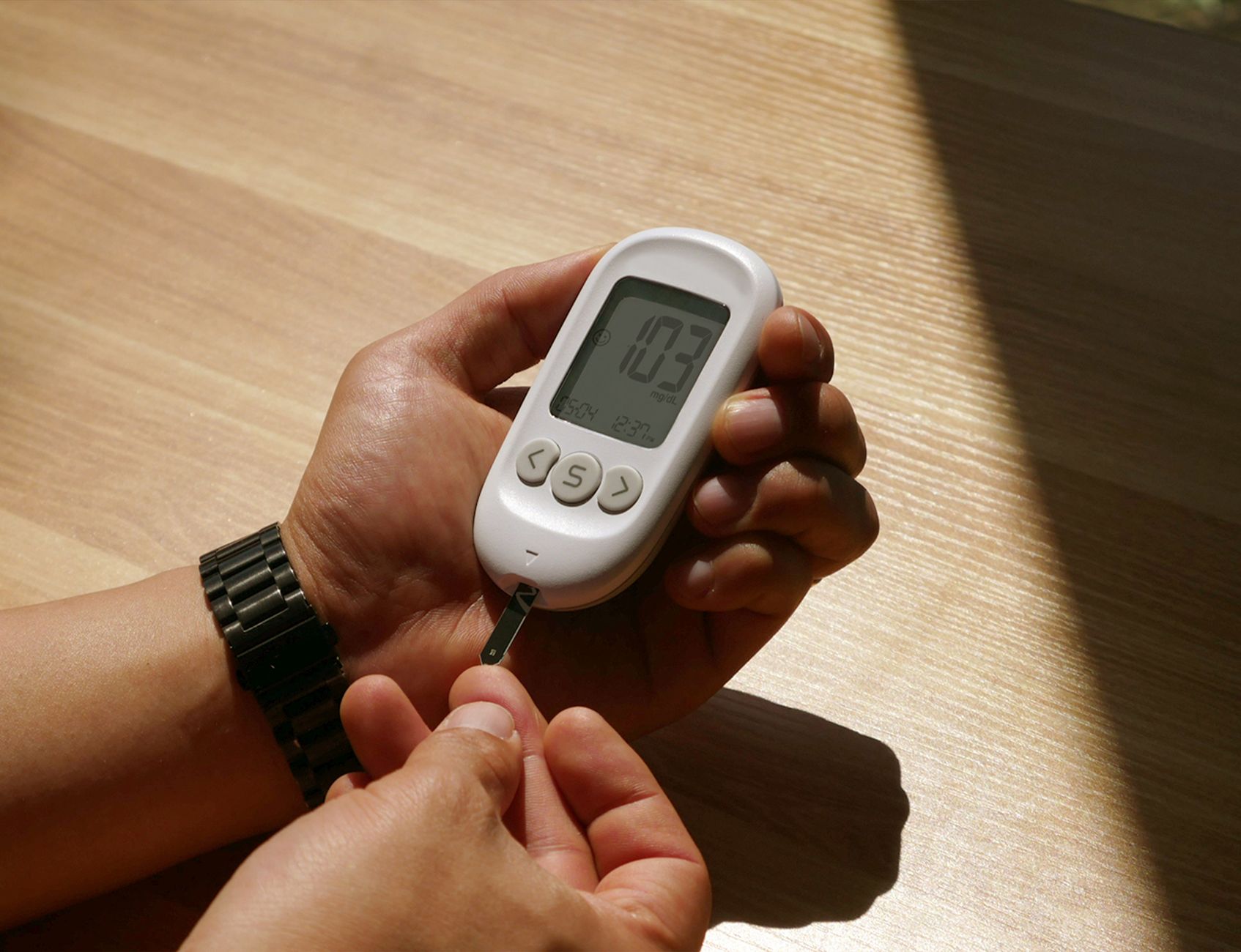
If you want to know exactly how a teaspoon of honey affects your own glucose, run a structured tolerance test rather than guessing.
A realistic example: a woman with well-controlled type 2 diabetes (A1C 6.8%) adds 1 teaspoon of honey to plain Greek yogurt with walnuts. The yogurt supplies protein, the walnuts supply fat and fiber, and the honey supplies flavor. At 2 hours, her glucose is up 25 mg/dL from baseline — an acceptable exchange, because she skipped her usual fruit serving to stay inside her carbohydrate budget that day.