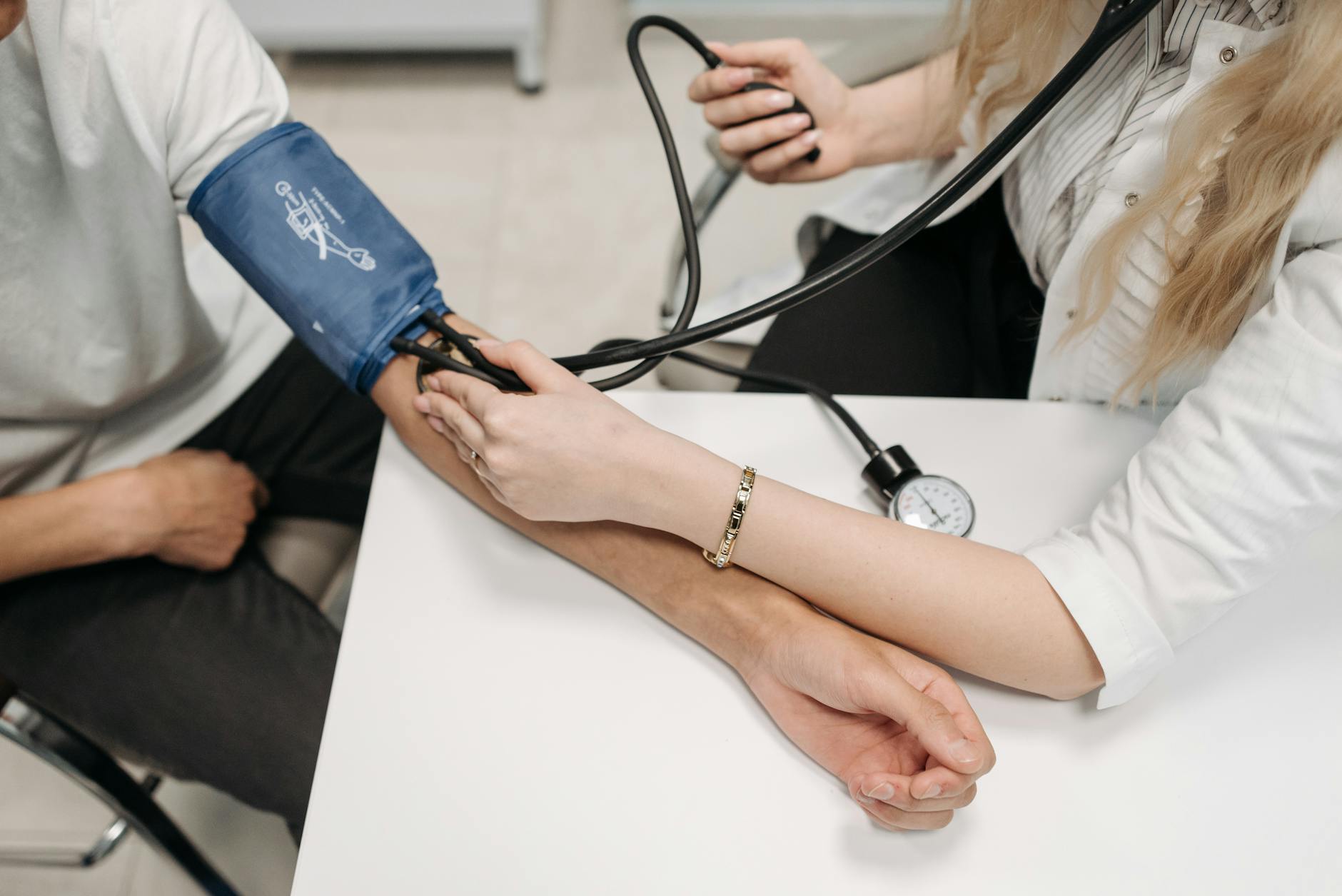
When blood pressure spikes to dangerous levels — systolic ≥180 mmHg or diastolic ≥120 mmHg — knowing the correct sequence of actions can prevent stroke, heart attack, or irreversible organ damage. Here is the clinically validated response based on the 2023 AHA/ACC hypertension guidelines.
In a hypertensive emergency (blood pressure ≥180/≥120 mmHg accompanied by symptoms such as chest pain, shortness of breath, severe headache, or neurological changes), call 911 immediately. While waiting for emergency services, sit upright with feet flat, practice slow breathing (4 seconds in, 7 seconds hold, 8 seconds out), loosen tight clothing, and stay calm. Do not take extra doses of your blood pressure medication unless a physician explicitly instructs you to do so. The 2023 AHA/ACC guidelines state that hypertensive crisis requires hospital-based IV antihypertensive therapy — no home remedy can safely replace emergency medical treatment.[1]
The Emergency Checklist — 7 Critical Actions
If you or someone with you has a blood pressure reading of 180/120 mmHg or higher and is experiencing symptoms, work through this checklist in order. The first two items are time-sensitive — do not delay emergency care to complete the rest.
Step-by-Step: Controlled Breathing Protocol
Controlled slow breathing is one of the few non-pharmacologic interventions that can produce a measurable, though temporary, reduction in blood pressure during an acute crisis. It works by enhancing baroreflex sensitivity and increasing vagal tone, which lowers sympathetic outflow.[3] Here is the exact sequence to follow.
Rescue breathing is a temporizing measure, not a treatment. A 2022 meta-analysis found that device-guided slow breathing (≈6 breaths per minute) reduced systolic BP by an average of 8.3 mmHg in controlled settings.[3] In an emergency, the effect may be smaller but still meaningful for preventing further escalation while awaiting definitive care.
Common Mistakes That Worsen a Hypertensive Crisis
When a person sees a very high number on the monitor, the instinct is to do something — anything — to bring it down fast. Many of these intuitive actions are counterproductive or downright dangerous. Here are the most common errors and why they backfire.
A patient with stage 2 hypertension who sees a reading of 190/110 may reach for their pill bottle and take an extra dose of amlodipine, lisinopril, or clonidine. This is one of the most dangerous things you can do. Short-acting nifedipine — historically used in hypertensive urgencies — is now explicitly contraindicated because it can cause an unpredictable, precipitous drop in BP that triggers myocardial infarction or stroke.[4] Oral clonidine can cause rebound hypertension if not carefully titrated. Never self-dose in an emergency.
Cold water triggers a robust sympathetic response — peripheral vasoconstriction, increased heart rate, and a surge in catecholamines. In a 2019 crossover trial, cold-water face immersion raised systolic BP by an average of 14 mmHg in normotensive adults.[5] In someone already in hypertensive crisis, this can push BP into life-threatening territory. The same principle applies to cold compresses or ice packs.
Physical activity increases cardiac output — the last thing you need during a hypertensive crisis. Walking, pacing, or even standing up repeatedly can elevate BP further. Conversely, lying flat on your back can increase intracranial pressure and worsen outcomes if a hemorrhagic stroke is already developing. The optimal position is seated, upright, with feet flat on the floor.
Caffeine is a vasoconstrictor and can raise systolic BP by 5–15 mmHg within 30 minutes in non-habitual users.[6] Alcohol causes an initial vasodilation followed by rebound vasoconstriction and increased heart rate. Both are unpredictable during a crisis and should be strictly avoided.
Checking your BP every 30 seconds fuels anxiety, which raises catecholamines and sustains the crisis. In a true emergency, one confirmatory reading in the opposite arm is enough. After that, focus on breathing and staying calm — not on the monitor. Anxiety-driven hyperventilation can actually worsen outcomes.
What Doing It Right Looks Like
A well-managed hypertensive emergency response follows a clear sequence. Here is what an ideal response looks like, from the moment the high reading appears to arrival at the emergency department.
Minute 0: The patient checks their BP due to a severe headache and blurred vision. Reading shows 198/118 mmHg. They recognize the number exceeds 180/120 and that they have symptoms of target organ involvement.
Minute 1: They call 911 immediately. They do not wait. They do not take medication. They sit down in a chair, feet flat, back supported, and loosen their collar.
Minutes 2–8 while waiting: They begin slow 4-7-8 breathing. They keep their eyes closed and focus on the exhale. A family member stays nearby, keeps the environment quiet, and prevents them from standing or moving.
Minute 9: EMS arrives, administers oxygen, establishes IV access, and begins transport. In the ED, the patient receives IV labetalol or nicardipine with continuous BP monitoring. BP comes down gradually — no more than 25% in the first hour — to avoid cerebral hypoperfusion.[1]
Outcome: No stroke, no myocardial injury. The patient is admitted for 24-hour observation and medication adjustment, then discharged with a revised outpatient regimen and a follow-up plan.
The difference between this scenario and a poor outcome often comes down to two factors: immediate EMS activation and avoiding the impulse to self-treat. The correct response is not about lowering the number at home — it is about getting to a setting where controlled, IV-based reduction is possible.
When to Escalate — Recognizing Target Organ Damage
Not every high reading is a true emergency. The distinction between hypertensive urgency (BP ≥180/≥120 without target organ damage) and hypertensive emergency (same BP range with evidence of acute organ injury) determines whether you can be managed with oral medications in observation or need immediate intensive care.[1] The presence of any of the following symptoms means you need emergency evaluation, not a waiting-room approach.
Even if you have no symptoms, a BP reading of ≥180/≥120 that persists for more than a few minutes should be evaluated in an emergency setting the same day. Approximately 1–2% of patients with asymptomatic hypertensive urgency develop target organ damage within 24–48 hours if untreated.[7] Do not let the absence of pain give you false reassurance.
Frequently Asked Questions
Can drinking water lower blood pressure immediately in an emergency?
No. While chronic dehydration can contribute to blood pressure dysregulation, drinking water does not produce an immediate, clinically meaningful drop in BP during a hypertensive crisis. In fact, drinking a large volume of water too quickly can cause a transient rise in blood pressure due to volume expansion and sympathetic activation. Focus on controlled breathing and calling 911 — not on hydration.
Does apple cider vinegar or garlic lower BP in an emergency?
No. There is no credible evidence that apple cider vinegar, garlic, hibiscus tea, or other home remedies produce a rapid enough reduction to be useful in a hypertensive emergency. Some of these substances have modest chronic effects over weeks to months, but in an acute crisis, relying on them delays essential medical care. Do not experiment with unproven remedies during an emergency.
Is it safe to sleep if my BP is 180/110 with no symptoms?
Not without medical evaluation first. A BP of 180/110 even without symptoms is classified as hypertensive urgency and carries a risk of progressing to emergency within hours. The 2023 AHA/ACC guidelines recommend evaluation in an urgent care or emergency setting within the same day.[1] If you fall asleep and your BP rises further, you may not wake up from a stroke or cardiac event. Have it evaluated before resting.
Can stress or anxiety alone cause a hypertensive emergency?
Severe acute stress can produce BP spikes of 30–40 mmHg above baseline in susceptible individuals, a phenomenon sometimes called "white coat crisis" or stress-induced hypertension. In someone with underlying vascular disease, these spikes can occasionally trigger true target organ damage. However, in most cases, stress alone is not sufficient to cause a hypertensive emergency in a person with normal baseline BP. If your BP reaches ≥180/120 during a panic attack, you should still seek evaluation because the physiology is indistinguishable from other causes.
How fast should medical professionals lower BP in an emergency?
According to the 2023 AHA/ACC guidelines, the goal in the first hour is a reduction of no more than 25% of the mean arterial pressure using IV antihypertensives (e.g., labetalol, nicardipine, clevidipine).[1] A more aggressive drop can cause cerebral hypoperfusion, particularly in older adults with chronic hypertension who have right-shifted autoregulation. The target at 24 hours is typically around 160/100–110 mmHg, with full normalization achieved over days to weeks — not minutes.
What if I am alone and cannot call 911 immediately?
If you are alone and physically unable to reach your phone or speak, try to open your front door so emergency personnel can enter. If you can press a medical alert button or use a smartwatch fall/emergency feature, do so. If you can reach your phone but cannot speak, call 911 and leave the line open — dispatchers can trace your location. Position yourself on the floor near an unlocked door if possible. Do not attempt to drive yourself to the hospital.
- A hypertensive emergency is defined by the 2023 AHA/ACC guidelines as BP ≥180/≥120 mmHg with evidence of acute target organ damage — call 911 immediately if you have chest pain, dyspnea, neurological symptoms, or vision changes.
- The only safe way to lower BP rapidly in a true emergency is through IV antihypertensives administered in a hospital setting. No home remedy or self-dosing can replicate this safely.
- While waiting for EMS, sit upright with feet flat, practice slow 4-7-8 breathing, loosen tight clothing, and stay still. These actions can lower BP by 10–20 mmHg through vagal activation.
- Never take extra doses of your regular BP medication, cold showers, caffeine, or alcohol during a hypertensive crisis — each can worsen outcomes.
- Even asymptomatic readings of ≥180/≥120 require same-day medical evaluation, as 1–2% of such cases progress to organ damage within 24–48 hours without treatment.
- Chronic hypertension management — consistent medication adherence, dietary sodium reduction, and regular monitoring — remains the most effective way to prevent ever facing an emergency crisis.
- American Heart Association / American College of Cardiology. 2023 AHA/ACC Guideline for the Diagnosis and Management of High Blood Pressure in Adults. Circulation, 2023.
- Centers for Disease Control and Prevention. Hypertensive Crisis: When You Should Call 911. CDC.gov, 2024.
- Johnson H, et al. Device-guided slow breathing for blood pressure reduction: a systematic review and meta-analysis. Journal of Hypertension, 2022; 40(7):1275–1285.
- Food and Drug Administration. Avoid using short-acting nifedipine for hypertensive emergencies. FDA Drug Safety Communication, 2021.
- Park J, et al. Cold pressor test and blood pressure response in normotensive adults. Journal of Physiological Anthropology, 2019; 38:12.
- Nurminen ML, et al. Caffeine and blood pressure: a critical review. European Journal of Clinical Nutrition, 2019; 73:1125–1133.
- National Institute for Health and Care Excellence (NICE). Hypertension in adults: diagnosis and management. NICE Guideline NG136, updated 2024.