More than 119 million American adults carry a diagnosis of hypertension, yet fewer than 1 in 4 can correctly define both numbers on their reading. Here is exactly what the top and bottom numbers represent, what the official thresholds are, and how to interpret your own result.
A blood pressure reading contains two numbers: systolic (top) and diastolic (bottom). Systolic measures pressure in your arteries when the heart contracts; diastolic measures pressure between beats. According to the 2024 AHA/ACC Hypertension Guideline, normal is below 120/80 mm Hg. Elevated is 120–129 systolic with diastolic below 80. Stage 1 hypertension starts at 130/80, and Stage 2 at 140/90 or higher. A hypertensive crisis is 180/120 or above and requires immediate medical attention.
- What Blood Pressure Numbers Actually Measure
- How the Two Numbers Work Together — and What Happens When One Is Out of Range
- Common Causes of Elevated Readings
- Recognizing the Signs — When Hypertension Speaks
- The Official Reference Ranges (2024 AHA/ACC)
- Treatment Approaches That Move the Numbers
- Diet and Lifestyle Changes That Lower Both Numbers
- Why Untreated High Blood Pressure Damages Organs
- When to Seek Medical Help
- Frequently Asked Questions
What Blood Pressure Numbers Actually Measure
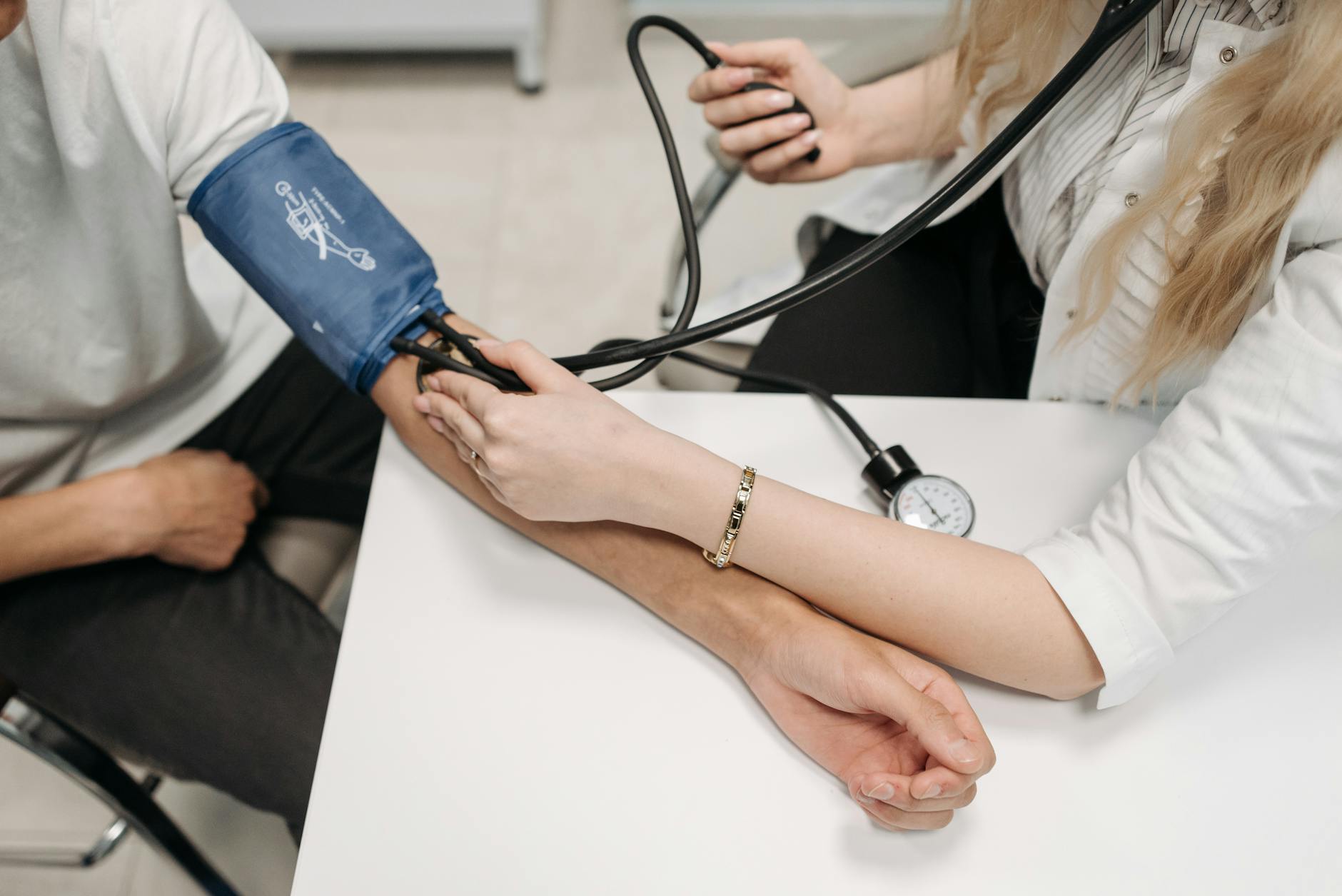
Every blood pressure reading consists of two numbers separated by a slash — 120/80 mm Hg, for example. The unit "mm Hg" stands for millimeters of mercury, the height a column of mercury rises under the pressure within your arteries. A sphygmomanometer (the cuff and gauge) translates hydraulic force into a numeric value.
The top number is the systolic blood pressure (SBP). It records the peak pressure in your arteries the moment your heart's left ventricle contracts and pushes blood into the aorta. This is the force your vessel walls must withstand at maximum output. Normal SBP stays below 120 mm Hg during rest.
The bottom number is the diastolic blood pressure (DBP). It measures the residual pressure in your arteries while the heart relaxes and refills between beats. Diastolic pressure reflects the baseline load your circulatory system never fully sheds — the constant stretch your vessel walls endure even when the heart is at rest. Normal DBP stays below 80 mm Hg.
The difference between the two numbers, called pulse pressure (SBP minus DBP), carries its own clinical meaning. A wide pulse pressure — say 160/70, giving 90 mm Hg — often signals arterial stiffness or aortic valve insufficiency. A narrow pulse pressure may indicate reduced cardiac output. In practice, both numbers matter, but systolic pressure becomes the more dominant predictor of cardiovascular events after age 50, according to data from the Framingham Heart Study.
"Systolic pressure is the force your heart generates with each beat; diastolic pressure is the baseline tension your arteries never get a break from. Both damage vessels, but through slightly different mechanics."
— Dr. Henry Black, past president of the American Society of Hypertension
One common misunderstanding: a "normal" reading does not guarantee healthy arteries. Blood pressure fluctuates throughout the day — it dips during sleep (nocturnal dipping), rises with exercise, and spikes under stress. A single reading at a doctor's office can be misleading. White-coat hypertension — elevated readings in clinical settings but normal readings at home — affects up to 30% of patients. The 2024 AHA/ACC guideline recommends out-of-office monitoring (home or ambulatory) to confirm a diagnosis before starting treatment.
How the Two Numbers Work Together — and What Happens When One Is Out of Range
Systolic and diastolic pressures usually rise and fall together, but not always. Isolated systolic hypertension — SBP at or above 130 with DBP below 80 — is the most common pattern in adults over 60. It reflects age-related stiffening of the large arteries. Isolated diastolic hypertension — DBP at or above 80 with SBP below 130 — occurs more often in younger adults and is linked to higher heart rate and peripheral vascular resistance.
Which number matters more? For decades, diastolic was considered the primary target. The landmark SHEP trial (1991) shifted the focus to systolic, showing that treating isolated systolic hypertension reduced stroke risk by 36%. Today, both numbers carry weight. The 2024 AHA/ACC guideline treats SBP and DBP thresholds equally when defining hypertension stages. A reading of 128/82, for instance, qualifies as Stage 1 hypertension because the diastolic number crosses the 80 mm Hg line, even though the systolic number sits below 130.
Clinical practice emphasizes systolic control in older adults and diastolic control in younger, high-risk groups. But the broader point is this: when either number stays above target chronically, the arterial wall endures cumulative microtrauma. Over years, that trauma triggers inflammation, smooth muscle hypertrophy, and collagen deposition — the structural changes that make vessels stiff, narrow, and prone to rupture or occlusion.
Common Causes of Elevated Readings
Blood pressure is a hemodynamic product of cardiac output and systemic vascular resistance. Anything that increases either — or both — pushes the numbers up. The underlying drivers fall into three broad categories.
About 90–95% of cases have no single identifiable cause. Instead, multiple factors converge: genetics (family history doubles lifetime risk), age (arteries stiffen naturally after 40), high dietary sodium (the average American consumes 3,400 mg/day — nearly 50% above the recommended 2,300 mg limit), obesity (each 10 kg of weight gain raises SBP by 3–6 mm Hg), and chronic stress that keeps the sympathetic nervous system in a sustained "fight or flight" state. Primary hypertension develops gradually over years and rarely produces symptoms until organ damage has begun.
In 5–10% of patients, elevated blood pressure stems from a specific, often reversible cause. The most common secondary drivers include obstructive sleep apnea (present in roughly 50% of resistant hypertension cases), primary aldosteronism (an adrenal gland disorder that drives sodium retention), renal artery stenosis (narrowed kidney arteries that activate the renin-angiotensin system), thyroid disorders, and certain medications — NSAIDs, oral contraceptives, decongestants, and corticosteroids. Secondary hypertension often presents with a sudden onset, higher baseline readings, or resistance to standard treatment. A kidney ultrasound or blood work for aldosterone and renin levels can help identify the culprit.
Not every high reading means you have hypertension. Acute spikes can follow caffeine consumption (a 200 mg dose raises SBP by about 6 mm Hg for 90 minutes), nicotine use, a full bladder, pain, anxiety, or even a recent meal high in sodium. The American Heart Association recommends sitting quietly for 5 minutes with feet flat on the floor and the cuff at heart level before taking a measurement. Readings taken immediately after exercise, during a panic attack, or in a cold room may not reflect true resting blood pressure.
Recognizing the Signs — When Hypertension Speaks
Hypertension earned the label "silent killer" because it typically produces no symptoms for years. By the time a patient notices something, organ damage may already be underway. That said, certain signals warrant immediate attention.
A critical distinction: hypertensive urgency (BP ≥ 180/120 without acute organ damage) and hypertensive emergency (same BP threshold plus evidence of end-organ injury — stroke, myocardial infarction, aortic dissection, pulmonary edema, or acute kidney injury) require different responses. Urgency can often be managed with oral medication adjustments over 24–48 hours. Emergency demands immediate hospital-level care. The presence of any symptom above combined with a reading ≥ 180/120 means call 911 — do not wait.
The Official Reference Ranges (2024 AHA/ACC)
The American Heart Association and American College of Cardiology released their most recent joint guideline in late 2024, which reaffirms the thresholds established in 2017. The European Society of Cardiology (ESC) uses slightly different cutoffs — 140/90 for the start of hypertension — but the AHA/ACC system is the standard used in U.S. clinical practice.
| Category | Systolic (mm Hg) | Diastolic (mm Hg) | Clinical Action |
|---|---|---|---|
| Normal | < 120 | and < 80 | Recheck annually or sooner if risk factors present |
| Elevated | 120–129 | and < 80 | Non-pharmacologic therapy; recheck in 3–6 months |
| Stage 1 Hypertension | 130–139 | or 80–89 | Assess ASCVD risk; lifestyle + medication if risk ≥ 10% |
| Stage 2 Hypertension | ≥ 140 | or ≥ 90 | Lifestyle + medication (usually two agents) |
| Hypertensive Crisis | ≥ 180 | and/or ≥ 120 | Immediate medical attention — call 911 if symptoms |
Note the "or" in Stage 1 and Stage 2: if either number crosses the threshold, the patient is classified in that stage. A reading of 132/76 is Stage 1 because the systolic is in the 130–139 range, even though the diastolic is normal. A reading of 118/84 is elevated because the diastolic exceeds 80, but the systolic is normal — this pattern is less common but still carries clinical significance.
Many patients report their blood pressure as "130 over 80" and believe that's acceptable because "it's only borderline." According to the 2024 AHA/ACC framework, 130/80 is Stage 1 hypertension — not borderline, not prehypertension (a term the guideline retired in 2017). This reclassification was based on data showing that individuals with readings in the 130–139/80–89 range have double the cardiovascular risk of those with normal readings.
Treatment Approaches That Move the Numbers
The goal of hypertension treatment is not merely to lower two numbers on a monitor — it is to reduce the long-term risk of stroke, myocardial infarction, heart failure, and kidney failure. The 2024 AHA/ACC guideline uses a risk-stratified approach: the higher your baseline cardiovascular risk, the lower your treatment target.
For most adults with Stage 1 hypertension and a 10-year atherosclerotic cardiovascular disease (ASCVD) risk below 10%, the first step is lifestyle modification alone for 3–6 months. If BP remains at or above 130/80 after that window, medication is initiated.
For those with Stage 1 and ASCVD risk ≥ 10% — or anyone with Stage 2 hypertension — the recommendation is pharmacotherapy from the start, typically a two-drug combination. First-line agents include thiazide diuretics (chlorthalidone, hydrochlorothiazide), ACE inhibitors (lisinopril, enalapril), angiotensin receptor blockers (losartan, valsartan), and dihydropyridine calcium channel blockers (amlodipine). Beta-blockers are reserved for patients with concurrent coronary artery disease or heart failure.
Treatment targets: For most adults, the goal is a sustained BP below 130/80. For those with chronic kidney disease, diabetes, or established cardiovascular disease, a target below 130/80 is also recommended — and for some high-risk subgroups, a systolic target of 120–125 may offer additional protection, though with a higher risk of hypotensive events. The SPRINT trial (2015) demonstrated that intensive systolic lowering to 120 mm Hg reduced cardiovascular events by 25% and all-cause mortality by 27% compared to the standard target of 140 mm Hg.
"The SPRINT data changed how we think about the systolic number. It's not enough to get below 140 — for high-risk patients, driving systolic down to 120 produces a measurable survival benefit."
— Dr. Jackson Wright, SPRINT Steering Committee member
Diet and Lifestyle Changes That Lower Both Numbers
Lifestyle modification is not optional — it is the foundation of every hypertension treatment plan. The magnitude of effect from individual interventions is additive, and combining several can produce a reduction equivalent to a low-dose antihypertensive medication.
A patient who adopts the DASH diet, reduces sodium to 1,800 mg/day, loses 7% of body weight, and walks 30 minutes daily can expect a total SBP reduction of 15–20 mm Hg — comparable to a moderate-dose two-drug regimen, but without the side effects or cost. The AHA emphasizes that lifestyle alone is sufficient first-line therapy for many Stage 1 patients.
Why Untreated High Blood Pressure Damages Organs
Elevated blood pressure is a mechanical force that damages tissues through three primary mechanisms: shear stress, barotrauma, and ischemia. Over years, the effects compound.
The heart. Chronic afterload (the pressure the left ventricle must overcome to eject blood) triggers left ventricular hypertrophy — thickened, stiffened heart muscle that eventually fails to relax adequately during diastole (heart failure with preserved ejection fraction) or pump effectively in systole (heart failure with reduced ejection fraction). Hypertension triples the lifetime risk of developing heart failure.
The brain. Sustained high pressure damages small penetrating arteries in the basal ganglia, thalamus, and brainstem — the same vessels that rupture in intracerebral hemorrhage. It also accelerates atherosclerosis in the carotid and vertebral arteries. The result: hypertension accounts for roughly half of all stroke risk globally. Even subclinical damage — silent white matter lesions visible on MRI — correlates with long-standing elevated readings.
The kidneys. The renal microvasculature is particularly vulnerable. Intraglomerular hypertension damages the filtering units (nephrons), leading to proteinuria and a gradual decline in estimated glomerular filtration rate (eGFR). Hypertension is the second leading cause of end-stage renal disease in the United States, behind only diabetes.
The eyes. Hypertensive retinopathy — narrowing, tortuosity, and "silver wiring" of retinal arterioles — correlates with the duration and severity of blood pressure elevation. In advanced cases, optic disc swelling (papilledema) signals malignant hypertension, a medical emergency.
The key clinical insight: lowering blood pressure by even 10 mm Hg systolic reduces stroke risk by about 27%, coronary heart disease risk by 20%, and heart failure risk by 28%, according to a 2021 meta-analysis in The Lancet of 48 randomized trials. The benefit is proportional — every millimeter counts.
When to Seek Medical Help
Knowing when a blood pressure number warrants an office visit vs. an emergency room trip can be confusing. Use the following framework:
If you experience a reading of 180/120 or higher accompanied by chest pain, vision changes, confusion, or neurological symptoms, call 911. Driving yourself to the hospital risks a syncopal episode or stroke while behind the wheel. Emergency medical services can begin treatment en route.
For everyone with known or suspected hypertension, home monitoring is essential. The AHA recommends an automatic, upper-arm cuff monitor with a validated device (look for the "AHA/AMA Validated" seal on the packaging). Check your BP twice daily — once in the morning before eating or taking medication, and once in the evening — and bring a log of at least 7 days of readings to your next appointment.
Frequently Asked Questions
The 120/80 threshold emerged from actuarial data collected by the insurance industry in the early 20th century, which showed that cardiovascular mortality rose steadily above that level. Modern confirmation came from the Framingham Heart Study, which demonstrated that the relationship between blood pressure and cardiovascular risk is continuous, starting as low as 115/75. Every 20 mm Hg increase in SBP doubles the risk of a cardiovascular event.
Yes — hypotension, defined as BP below 90/60 mm Hg, can cause dizziness, fainting, and inadequate perfusion to vital organs. However, in healthy individuals without symptoms, readings as low as 85/55 may be normal. The danger zone for adverse outcomes starts when SBP drops below 90 accompanied by symptoms, or when treatment drives BP too aggressively in older or frail adults. The 2024 guideline advises caution in adults over 75, for whom a standing SBP below 110 may increase fall risk.
Both. Acute anxiety — such as a panic attack — can elevate SBP by 20–30 mm Hg transiently via sympathetic activation. Chronic anxiety and stress are associated with sustained higher baseline pressure through mechanisms including increased cortisol, reduced baroreflex sensitivity, and unhealthy coping behaviors (poor sleep, comfort eating, alcohol use). A 2023 meta-analysis in Hypertension found that adults with generalized anxiety disorder had, on average, 4 mm Hg higher SBP than controls.
White-coat hypertension describes a pattern of persistently elevated readings in a clinical setting (doctor's office, hospital) but normal readings at home (typically below 135/85 on home monitoring). It affects roughly 15–30% of patients. Whether it requires treatment is debated: untreated white-coat hypertension carries a slightly elevated cardiovascular risk compared to true normotension, but far less than sustained hypertension. The 2024 AHA/ACC guideline recommends confirming the diagnosis with ambulatory or home monitoring before initiating medication. If the out-of-office readings are normal, lifestyle counseling and annual rechecks are sufficient.
No — caffeine's pressor effect is acute and transient. A 200–300 mg dose raises SBP by about 6–8 mm Hg within 30 minutes, and the effect fades over 1–3 hours. Regular coffee drinkers develop partial tolerance, blunting the spike. Long-term epidemiologic studies do not show a link between habitual coffee consumption and incident hypertension. The concern is more relevant for energy drinks and concentrated caffeine supplements, which can deliver 300–500 mg in a single serving and trigger more pronounced spikes.
Bring your home monitor to your next appointment so the clinic can validate its accuracy against a calibrated office device (agree within 5 mm Hg). Check that you are using the correct cuff size — a cuff that is too small can overestimate SBP by 10–15 mm Hg. Also confirm your technique: sit with back supported, feet flat, arm at heart level, cuff directly on bare skin (not over clothing), and rest for 5 minutes before measuring. If validated discrepancies persist, the doctor may order 24-hour ambulatory blood pressure monitoring, which provides the most reliable assessment of your true average pressure.
- A blood pressure reading of 120/80 mm Hg is the upper limit of normal. Readings at or above 130/80 qualify as Stage 1 hypertension under the 2024 AHA/ACC guideline.
- Systolic pressure (top number) measures force during heart contraction; diastolic pressure (bottom number) measures residual force between beats. Both independently predict cardiovascular risk.
- Lifestyle modification — the DASH diet, sodium reduction to ≤2,300 mg/day, 150 minutes/week of aerobic exercise, and 5–10% weight loss — can lower SBP by 15–20 mm Hg, matching the effect of low-dose combination medication.
- Untreated hypertension damages the heart, brain, kidneys, and eyes through chronic mechanical stress. Lowering SBP by 10 mm Hg reduces stroke risk by 27% and heart failure risk by 28%.
- Home monitoring with a validated upper-arm cuff is essential for accurate diagnosis. A reading of 180/120 or higher accompanied by symptoms requires immediate emergency care.