High blood pressure (hypertension) is defined by a sustained systolic blood pressure of 130 mmHg or higher, or a diastolic blood pressure of 80 mmHg or higher, based on the 2017 ACC/AHA guidelines. This comprehensive guide explains the clinical thresholds, how they are measured, why they matter, and what you can do to keep your numbers in a healthy range.
- What Is High Blood Pressure? The Clinical Definition
- Blood Pressure Categories: Understanding the Numbers
- Causes and Risk Factors for Hypertension
- Why High Blood Pressure Matters: Complications of Untreated Hypertension
- Symptoms: The Silent Killer
- How Is High Blood Pressure Diagnosed?
- Treatment and Management Approaches
- Lifestyle Changes That Lower Blood Pressure
- Common Myths About High Blood Pressure
- When to See a Doctor
- Frequently Asked Questions
What Is High Blood Pressure? The Clinical Definition
High blood pressure, medically known as hypertension, is a condition in which the force of blood against the walls of your arteries is consistently too high. This sustained pressure damages the arterial lining over time, increasing the risk for heart attack, stroke, kidney disease, and other serious health problems. The 2017 American College of Cardiology / American Heart Association (ACC/AHA) guideline redefined the threshold for stage 1 hypertension as a systolic blood pressure of 130 mmHg or higher, or a diastolic blood pressure of 80 mmHg or higher. This lower threshold was adopted to identify at-risk individuals earlier and to encourage lifestyle interventions before irreversible vascular damage occurs. The European Society of Cardiology (ESC) uses a slightly different classification, defining hypertension as a systolic reading of 140 mmHg or higher or a diastolic reading of 90 mmHg or higher, but both guidelines agree that sustained readings above 130/80 mmHg warrant attention. A single high reading does not constitute a diagnosis — hypertension is defined by elevated readings on at least two separate occasions, measured under proper conditions.
According to the 2017 ACC/AHA guideline, stage 1 hypertension is defined as systolic blood pressure 130–139 mmHg OR diastolic blood pressure 80–89 mmHg. Stage 2 hypertension is defined as systolic ≥140 mmHg OR diastolic ≥90 mmHg. The guideline emphasizes that treatment decisions should be based on average readings from ≥2 measurements on ≥2 occasions.
Blood pressure is expressed as two numbers: systolic (the pressure when the heart beats) over diastolic (the pressure when the heart rests between beats). Systolic pressure is more strongly associated with cardiovascular risk in people over 50, but both components matter independently. The SPRINT trial (2015) demonstrated that targeting a systolic blood pressure of <120 mmHg — rather than the traditional <140 mmHg — significantly reduced rates of cardiovascular events and all-cause mortality by about 25% in high-risk patients. This landmark study influenced guideline committees worldwide and shifted the clinical conversation around what is considered "normal."
Blood Pressure Categories: Understanding the Numbers
Knowing where your blood pressure falls on the clinical spectrum is essential for understanding your risk and the urgency of intervention. The table below summarizes the ACC/AHA 2017 classification system, which is the most widely adopted in the United States. Each category carries distinct implications for monitoring, lifestyle modification, and pharmacologic treatment.
| Category | Systolic (mmHg) | Diastolic (mmHg) | Action |
|---|---|---|---|
| Normal | <120 | <80 | Maintain healthy lifestyle |
| Elevated | 120–129 | <80 | Lifestyle modification; recheck in 3–6 months |
| Stage 1 Hypertension | 130–139 | 80–89 | Lifestyle + assess ASCVD risk; consider medication if risk ≥10% |
| Stage 2 Hypertension | ≥140 | ≥90 | Lifestyle + medication (usually two agents) |
| Hypertensive Crisis | >180 | >120 | Immediate medical attention |
The ESC/ESH 2023 guidelines use a slightly different schema: optimal (<120/80), normal (120–129/80–84), high-normal (130–139/85–89), grade 1 hypertension (140–159/90–99), grade 2 hypertension (160–179/100–109), and grade 3 hypertension (≥180/110). Despite numerical differences, the core principle is consistent: risk increases continuously with rising blood pressure, and earlier intervention yields better outcomes. Approximately 47% of U.S. adults have blood pressure above the normal threshold under the ACC/AHA definition, according to CDC data from 2017–2020. The global prevalence of hypertension in adults aged 30–79 is about 33%, with the highest rates in low- and middle-income countries (WHO, 2023). Understanding where you fall on this spectrum is the first step toward personalized cardiovascular risk reduction.
Causes and Risk Factors for Hypertension
Most cases of hypertension — about 90–95% — are classified as primary (essential) hypertension, meaning no single identifiable cause is found. Instead, it arises from a complex interplay of genetic, environmental, and behavioral factors. The remaining 5–10% have secondary hypertension, caused by an underlying condition such as kidney disease, renovascular stenosis, sleep apnea, or endocrine disorders (e.g., primary aldosteronism, pheochromocytoma). Identifying secondary causes is critical because treating the root problem can sometimes normalize blood pressure without lifelong medication.
Non-Modifiable Risk Factors — age, genetics, family history
Advancing age is the strongest non-modifiable risk factor. Arterial stiffness increases with age, raising systolic pressure while diastolic often declines after age 60. Family history of hypertension doubles the lifetime risk. Genetic factors account for 30–50% of blood pressure variability. Men have higher prevalence until age 65, after which rates in women equal or exceed those in men. Race also plays a role: non-Hispanic Black adults have a 40% higher prevalence of hypertension compared to non-Hispanic White adults in the U.S., and they tend to develop it earlier with more severe outcomes.
Modifiable Lifestyle Risk Factors — diet, sodium, alcohol, activity
Dietary sodium intake is the most studied modifiable factor. The average American consumes about 3,400 mg of sodium per day, far exceeding the recommended 2,300 mg limit (and the ideal 1,500 mg set by the AHA). Each gram of sodium reduction can lower systolic BP by 1–4 mmHg. Excess alcohol (more than 1 drink/day for women, 2 for men) raises BP dose-dependently. Physical inactivity, low potassium intake (under 3,500 mg/day), and smoking (which acutely raises BP and stiffens arteries) are all independent contributors. Chronic stress — through sustained sympathetic nervous system activation — also elevates BP over time. Obesity is perhaps the most potent modifiable driver: each 5 kg/m² increase in BMI is associated with a 5 mmHg rise in systolic BP.
Secondary Causes — when an underlying condition is responsible
Secondary hypertension should be suspected when BP remains uncontrolled despite 3 or more medications, when onset is sudden or occurs before age 30, or when a patient presents with unexplained hypokalemia, episodic headaches, palpitations, or sweating. Common secondary causes include: chronic kidney disease (accounts for 2–5% of cases), renovascular stenosis (especially in older adults with diffuse atherosclerosis), primary aldosteronism (prevalence of 5–10% in resistant hypertension), obstructive sleep apnea (present in 30–50% of hypertensive patients with obesity), and pheochromocytoma (rare, but episodic and dramatic). Workup includes serum creatinine and eGFR, aldosterone-to-renin ratio, polysomnography, and imaging as indicated.
Why High Blood Pressure Matters: Complications of Untreated Hypertension
Chronic hypertension is one of the most potent risk factors for cardiovascular disease, stroke, kidney failure, and premature death worldwide. The relationship between blood pressure and risk is continuous, independent, and graded — there is no threshold below which risk suddenly disappears. For every 20 mmHg increase in systolic BP (or 10 mmHg in diastolic BP), the risk of cardiovascular disease doubles across the entire BP range from 115/75 upward, according to a meta-analysis of 61 prospective studies involving nearly 1 million adults (Lewington et al., Lancet, 2002). Untreated or poorly controlled hypertension causes damage through several mechanisms: mechanical shear stress on the endothelium, promotion of atherosclerosis, left ventricular hypertrophy, renal arteriolar damage, and cerebral microvascular injury. The result is an increased incidence of myocardial infarction, heart failure, stroke (both ischemic and hemorrhagic), chronic kidney disease (leading to dialysis), peripheral artery disease, and vascular dementia. Hypertensive retinopathy — damage to the retinal vasculature — can cause visual impairment if left unchecked. The economic burden is staggering: hypertension-related cardiovascular disease costs the U.S. health system over $250 billion annually in direct and indirect costs (CDC, 2023). The good news is that every 10 mmHg reduction in systolic BP reduces the risk of major cardiovascular events by about 20%, heart failure by 28%, and stroke by 27% (Blood Pressure Lowering Treatment Trialists' Collaboration, 2021).
A hypertensive crisis — defined as systolic BP >180 mmHg OR diastolic BP >120 mmHg — requires immediate medical attention. Call 911 if you experience chest pain, shortness of breath, severe headache, blurry vision, confusion, nosebleeds, or nausea/vomiting in conjunction with very high readings. Do not wait to see if symptoms resolve on their own.
Symptoms: The Silent Killer
Hypertension is famously called the "silent killer" because it usually causes no symptoms for years, even decades, while quietly damaging blood vessels and organs. Most people with elevated or stage 1 hypertension feel perfectly well. This lack of warning signs is precisely why routine blood pressure screening is so critical. When symptoms do appear, they often indicate advanced or end-organ damage and should never be ignored. However, it is also important to note that some people claim to feel symptoms like headaches, dizziness, or flushing when their BP is elevated, but these are non-specific and unreliable for diagnosis. The only way to know your blood pressure is to measure it. That said, severely elevated readings (above 180/120 mmHg) can produce acute symptoms including throbbing headache at the back of the head, blurred vision or visual disturbances (scotomata), chest discomfort or palpitations, shortness of breath, epistaxis (nosebleeds), tinnitus, and confusion or altered mental status. These should be treated as medical emergencies. For most people, however, the absence of symptoms does not mean the absence of risk — and regular monitoring remains the cornerstone of early detection.
How Is High Blood Pressure Diagnosed?
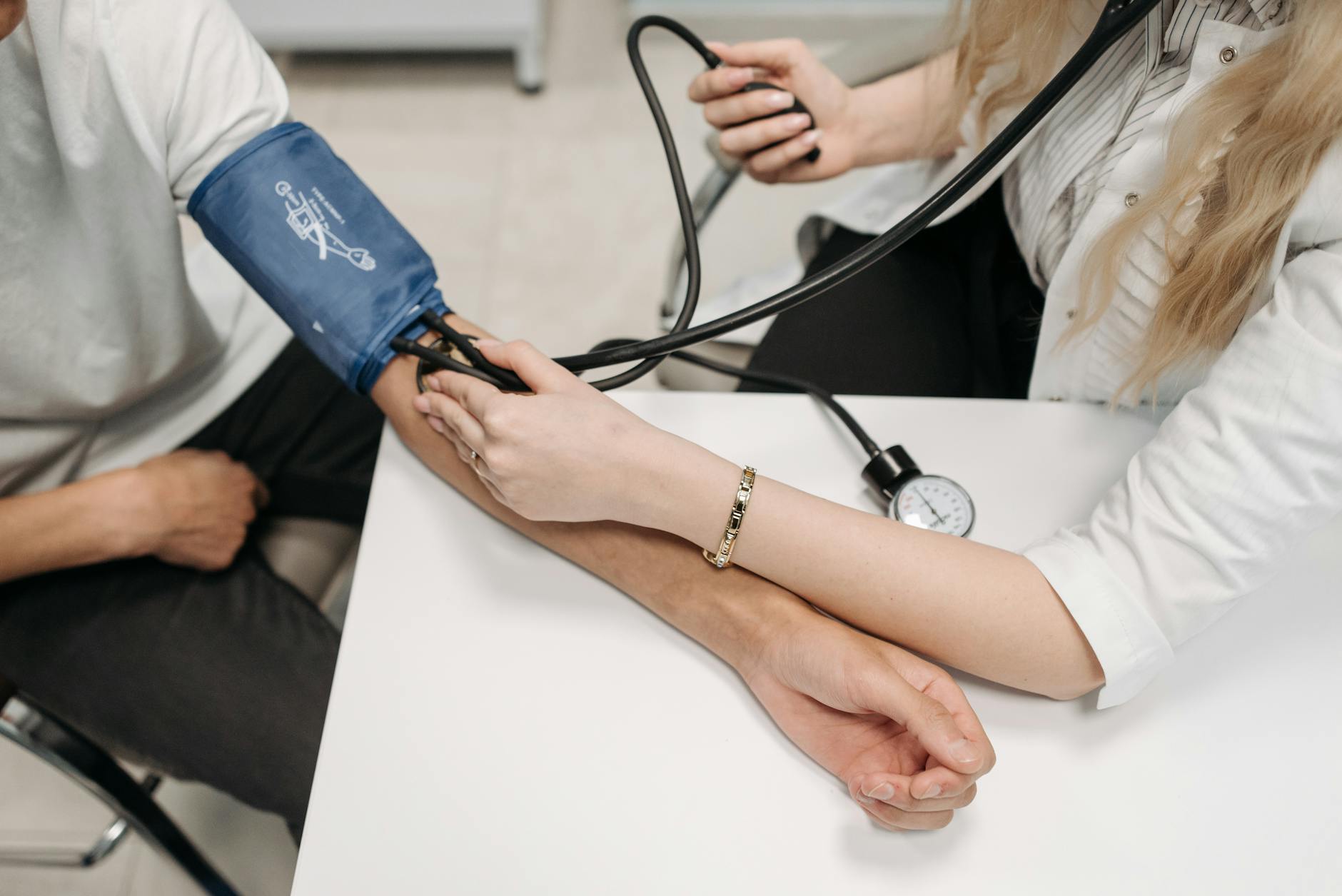
A diagnosis of hypertension is not based on a single reading. It requires a systematic approach that includes proper measurement technique, multiple readings over time, and often out-of-office monitoring to rule out "white coat hypertension" (elevated readings in the clinic but normal at home). The diagnosis pathway involves three key components:
Using a cuff that is too small can overestimate BP by 10–40 mmHg. A 2023 study in JAMA Internal Medicine found that using a standard adult cuff on patients who require a large or extra-large cuff led to misclassification of hypertension in over 40% of cases. Always ensure the cuff bladder covers 80–100% of the arm circumference.
Treatment and Management Approaches
Treatment for hypertension is individualized based on the absolute blood pressure level, the presence of ASCVD or risk factors, age, comorbidities, and tolerance. The 2017 ACC/AHA guideline recommends pharmacotherapy for patients with stage 1 hypertension who have established ASCVD or a 10-year ASCVD risk ≥10%. For those with stage 2 hypertension, medication is recommended in addition to lifestyle changes. First-line agents include thiazide diuretics (chlorthalidone, hydrochlorothiazide), calcium channel blockers (amlodipine), ACE inhibitors (lisinopril), and angiotensin receptor blockers (losartan). Beta-blockers are reserved for specific indications (e.g., heart failure, post-MI, atrial fibrillation). Most patients will require two or more agents to reach target BP — especially those starting at Stage 2 or above. The SPRINT trial showed that intensive treatment (systolic target <120 mmHg) reduced cardiovascular events by 25% compared to standard treatment (<140 mmHg), though it also increased the risk of hypotension, syncope, and acute kidney injury. The decision to intensify therapy must balance benefit and harm, particularly in older adults with frailty or orthostatic tendencies.
For elevated BP (120–129/<80): lifestyle modification alone is recommended — DASH diet, sodium reduction, increased potassium, weight loss, aerobic exercise (30 min/day, 5 days/week), and alcohol moderation. Recheck in 3–6 months.
For stage 1 + high risk or stage 2: initiate with 1–2 first-line agents. Common combinations: ACEi/ARB + CCB, ACEi/ARB + thiazide, or CCB + thiazide. Single-pill combinations improve adherence. Titrate every 2–4 weeks until BP is controlled.
For resistant hypertension (BP above target despite 3 agents including a diuretic), additional agents such as spironolactone (aldosterone antagonist), hydralazine, or minoxidil may be considered. Device-based therapies (e.g., renal denervation) remain investigational in the U.S. but are approved in some European centers for select patients. The key to successful management is consistent follow-up, medication adherence (which is poor in about 50% of patients within the first year), and addressing social determinants of health that limit access to healthy food, exercise spaces, and affordable medications.
Lifestyle Changes That Lower Blood Pressure
Lifestyle modification is the foundation of hypertension management — and for many patients with elevated or stage 1 hypertension, it can be enough to bring BP back to normal without medication. The AHA and ACC recommend a multipronged approach with additive effects. Each intervention alone produces modest reductions, but combined they can rival drug therapy.
DASH Diet: Reduces systolic BP by 8–14 mmHg. High in fruits, vegetables, whole grains, low-fat dairy, and lean protein; low in saturated fat, cholesterol, and refined sugar. Sodium restriction to ≤1,500 mg/day lowers BP by 5–10 mmHg. Potassium supplementation (≥3,500 mg/day from food) lowers BP by 4–8 mmHg — get it from bananas, avocados, spinach, sweet potatoes, and beans. Aerobic exercise: 30–45 minutes of moderate-intensity activity (brisk walking, cycling) on most days lowers systolic BP by 5–8 mmHg. Weight loss: each 1 kg (2.2 lbs) of weight loss reduces BP by about 1 mmHg. Alcohol moderation: limit to ≤1 drink/day for women, ≤2 for men. Smoking cessation: quitting reduces BP acutely and slows long-term vascular stiffening.
A pragmatic 4-week plan for someone with elevated BP might start with replacing one high-sodium meal per day with a DASH-style meal, adding a 15-minute walk after dinner, and switching from sugary drinks to water. These small steps compound over time. The PREMIER trial (2003) showed that a behavioral intervention combining the DASH diet, sodium reduction, and exercise produced an average systolic BP reduction of 12.5 mmHg at 6 months — approaching what a single antihypertensive drug achieves. For patients already on medication, lifestyle improvements can reduce the number or dose of drugs needed, but medications should never be stopped without medical supervision.
Common Myths About High Blood Pressure
Misinformation about hypertension is widespread, and myths can lead to delayed diagnosis, poor adherence, or dangerous self-management. Here we address the most common misconceptions with evidence-based clarifications.
Hypertension typically causes no symptoms until it is severe or has caused end-organ damage. Relying on "feeling fine" is dangerous. The only reliable method to know your BP is to measure it with a validated device. Up to 46% of adults with hypertension are unaware they have it (WHO, 2023).
Not necessarily. Many patients with stage 1 hypertension who achieve sustained weight loss, adopt the DASH diet, and increase physical activity can reduce or stop their medications under medical supervision. However, for most people with stage 2 hypertension or those with multiple risk factors, long-term therapy is typically needed to maintain protection. Medication "holidays" should only be done with a provider's guidance.
Excess sodium raises blood pressure independently of other lifestyle factors. While exercise and a nutrient-rich diet provide significant protection, they do not fully negate the hypertensive effect of high sodium intake. The INTERSALT study and subsequent trials have confirmed that sodium reduction lowers BP across all population subgroups, regardless of baseline health.
Not always. For healthy adults, a systolic BP of 100–120 mmHg is generally ideal. But if you develop dizziness, fatigue, fainting, or confusion when BP drops (e.g., orthostatic hypotension), it may signal inadequate perfusion to vital organs — especially in older adults, those on multiple antihypertensives, or people with autonomic dysfunction. Extremely low readings (e.g., <90/60) with symptoms require medical evaluation.
Some supplements (e.g., garlic, hibiscus, beetroot juice, potassium, CoQ10) have shown modest BP-lowering effects in small studies, but none have demonstrated the robust, reproducible cardiovascular event reduction seen with guideline-directed pharmacotherapy. Relying solely on supplements — especially for stage 2 hypertension — is dangerous and delays effective treatment. Always discuss supplements with your healthcare provider, as some can interfere with prescription drugs.
When to See a Doctor
Given that hypertension is asymptomatic in the vast majority of cases, the CDC and AHA recommend that all adults aged 18 and older have their blood pressure checked at least once every two years if their readings are consistently normal (<120/80), and annually if they have elevated readings (120–129/<80). You should schedule an appointment specifically to discuss blood pressure if:
If your blood pressure is ≥180/120 mmHg and you have symptoms such as chest pain, severe headache, shortness of breath, back pain (possible aortic dissection), seizure, or vision loss, call 911 immediately. Do not drive yourself to the hospital. Asymptomatic readings at this level also warrant urgent evaluation — contact your provider or go to the emergency department within 24 hours.
Establishing care with a primary care provider or a cardiologist for regular monitoring is one of the most effective ways to prevent hypertension-related complications. The U.S. Preventive Services Task Force (USPSTF) gives an A-grade recommendation to screening for hypertension in adults 18 and older, and strongly encourages the use of out-of-office BP monitoring for diagnostic confirmation. Telehealth follow-ups can be effective for BP management once the treatment plan is established — a study in the New England Journal of Medicine (NEJM Catalyst, 2022) showed that home BP monitoring combined with virtual check-ins improved control rates from 44% to 71% over 12 months.
Frequently Asked Questions
What exactly is considered high blood pressure in 2026?
Under the 2017 ACC/AHA guidelines (still widely used as of 2026), high blood pressure (hypertension) is defined as a systolic blood pressure of 130 mmHg or higher OR a diastolic blood pressure of 80 mmHg or higher, based on the average of two or more properly measured readings on two or more separate occasions. Stage 2 hypertension is ≥140/90 mmHg. The European Society of Cardiology uses a threshold of 140/90 mmHg for diagnosis but agrees that the target for treatment is generally <130/80 mmHg for most adults.
What is the first number in blood pressure — and which is more important?
The first (top) number is the systolic blood pressure — the pressure in your arteries when your heart beats. The second (bottom) number is the diastolic pressure — the pressure when your heart rests between beats. For people over 50, systolic pressure is a stronger predictor of cardiovascular risk. However, both numbers matter, and isolated diastolic hypertension (elevated diastolic with normal systolic) is also associated with increased risk, particularly in younger adults. The 2017 ACC/AHA guideline uses both numbers to define stages because the risk is additive.
Can I check my blood pressure at home, and what device should I use?
Yes — home blood pressure monitoring is strongly recommended for diagnosis and management. Use an automated, upper-arm oscillometric device with a validated seal of approval (look for the AHMA or ESH validation mark, or check validatebp.org). Wrist monitors are less reliable. Choose a cuff size that fits your arm circumference (measure mid-bicep). Take readings at the same time each day — morning (before medication, before eating) and evening (before dinner, before bed) — after 5 minutes of rest. Avoid caffeine, exercise, and smoking for 30 minutes beforehand. Record your readings in a logbook or app to share with your provider.
How quickly can lifestyle changes lower blood pressure?
Sodium reduction can lower BP within 1–2 weeks. The DASH diet produces measurable reductions in 2–4 weeks. Regular aerobic exercise improves BP within 4–6 weeks of consistent training. Weight loss effects accrue over 2–6 months depending on the amount lost. Acute stress-reduction techniques (e.g., 10-minute breathing exercises) produce transient drops but sustained benefit requires regular practice. For patients starting medication, initial effects are usually seen within 1–2 weeks, with full effect by 4–8 weeks. It is important to note that lifestyle changes are not a substitute for medication in patients with stage 2 hypertension or those with high ASCVD risk — but they can reduce the number and dose of medications needed.
If my BP is 140/90, do I need medication right away?
A reading of 140/90 mmHg qualifies as stage 2 hypertension under ACC/AHA criteria. The need for immediate medication depends on your overall cardiovascular risk. If you have established ASCVD (heart disease, stroke, peripheral artery disease), diabetes, chronic kidney disease, or a 10-year ASCVD risk score ≥10%, the guideline recommends starting medication right away along with lifestyle changes. If you are younger, have no other risk factors, and your 10-year risk is low, your provider may consider a trial of intensive lifestyle modification (DASH diet, sodium restriction, exercise, weight loss) for 3–6 months before starting medication, provided you are closely monitored. However, because 140/90 represents stage 2 hypertension, most patients will require pharmacotherapy to reach target.
What is normal blood pressure for a 70-year-old?
The target blood pressure for most older adults (age ≥65) is the same as for younger adults — generally <130/80 mmHg — according to both ACC/AHA and ESC guidelines, based on evidence from the SPRINT trial (which included adults up to age 89). However, individualization is critical. For patients with significant frailty, limited life expectancy, orthostatic hypotension, or multiple comorbidities, a less aggressive target (e.g., <140/90) may be appropriate. The SPRINT trial showed benefit down to <120 mmHg (systolic) in those who tolerated it, but the rate of adverse events (syncope, falls, acute kidney injury) was higher in the intensive arm. The key is to avoid over-treatment that causes harm, while not leaving high risk unprotected.
Does coffee or caffeine raise blood pressure permanently?
Caffeine can cause an acute, temporary increase in blood pressure of 5–15 mmHg for 1–3 hours after consumption, especially in people who are not habitual caffeine consumers or who are salt-sensitive. However, in most regular coffee drinkers, tolerance develops and chronic consumption is not associated with sustained hypertension or increased cardiovascular risk. A 2023 meta-analysis in the European Journal of Preventive Cardiology found that moderate coffee consumption (1–4 cups/day) was actually associated with a lower risk of cardiovascular disease and all-cause mortality. The AHA advises that coffee is acceptable for most people with hypertension, but individual responses vary — if you notice a consistent spike in BP after coffee, you may choose to limit it or switch to decaf.