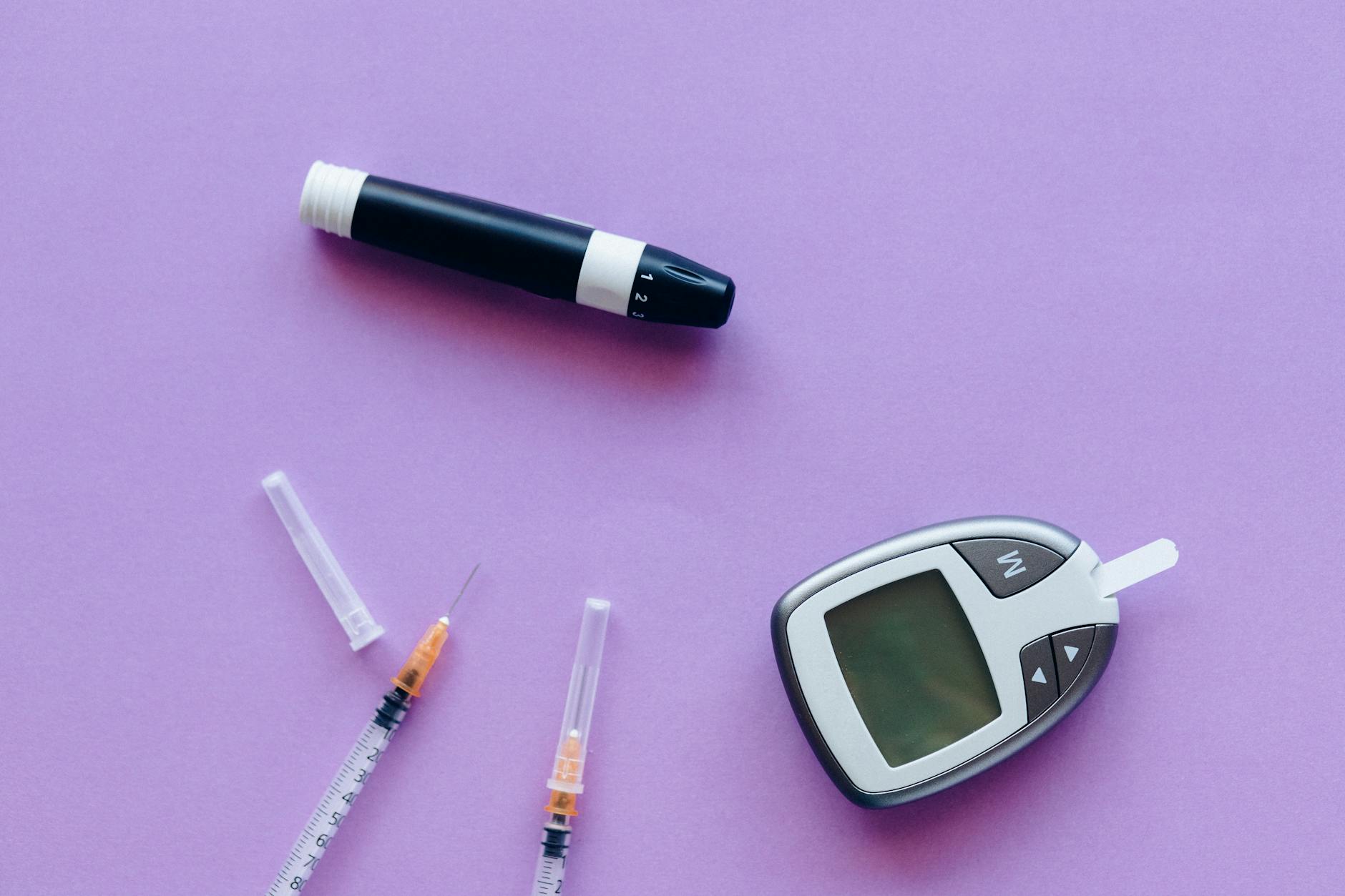
More than 30% of adults with type 2 diabetes eventually require basal insulin to achieve glycemic targets. Here is a clinically grounded guide to long-acting insulin formulations, initiation strategies, titration protocols, and safety monitoring — informed by ADA Standards of Care and recent landmark trials.
- What Is Long-Acting Insulin and Why Is It Used in Type 2 Diabetes?
- Types of Long-Acting Insulin: Pharmacokinetics and Key Differences
- When to Start Long-Acting Insulin in Type 2 Diabetes: Guidelines and Indicators
- How to Initiate and Titrate Long-Acting Insulin Safely
- Clinical Benefits, Hypoglycemia Risk, and Cardiovascular Safety
- Common Myths About Long-Acting Insulin in Type 2 Diabetes
- Frequently Asked Questions
What Is Long-Acting Insulin and Why Is It Used in Type 2 Diabetes?
Long-acting insulin — also called basal insulin — is a synthetic insulin analogue designed to provide a steady, low-level release of insulin throughout the day and night. Its primary role in type 2 diabetes is to suppress hepatic glucose production and maintain stable fasting blood glucose levels. Unlike rapid-acting insulin, which is dosed around meals, long-acting insulin provides a background insulin “floor” that mimics the body's own basal secretion.
In type 2 diabetes, progressive beta-cell dysfunction means that many individuals eventually cannot produce enough endogenous insulin to meet basal needs. The ADA Standards of Care in Diabetes — 2026 recommend that when HbA1c remains above target (typically ≥7.0% to <8.0% depending on individualized goals) despite oral agents and GLP-1 receptor agonists, the addition of basal insulin is the preferred next step. Approximately 30% to 40% of people with type 2 diabetes will require insulin therapy within 6 to 10 years of diagnosis, and long-acting insulin is almost always the first insulin prescribed.
Long-acting (basal) insulin is defined as insulin with a peakless, flat pharmacokinetic profile that provides coverage for approximately 18 to 42 hours depending on the formulation, enabling once-daily dosing in most patients. The goal is to achieve fasting plasma glucose between 80 and 130 mg/dL (4.4 to 7.2 mmol/L) without causing nocturnal hypoglycemia.
Types of Long-Acting Insulin: Pharmacokinetics and Key Differences
Four major long-acting insulin formulations are currently available in the United States and most global markets. Each has distinct onset, peak profile, duration, and clinical considerations that influence choice.
Onset ~2–4 h; duration ~20–24 h; peakless profile; once-daily dosing. Most extensively studied basal insulin. Available as biosimilars.
More concentrated (300 U/mL); longer duration up to 30 h; flatter profile than U-100; may have lower hypoglycemia risk, especially nocturnal.
Ultra-long duration ~42+ h; flat, peakless profile; flexible once-daily dosing (can vary injection time by 8–12 h). Lower day-to-day variability in glucose-lowering effect.
Duration ~16–24 h; often requires twice-daily dosing at higher doses; more weight-neutral than glargine in some studies. Less commonly used since degludec became available.
| Property | Glargine U-100 | Glargine U-300 | Degludec | Detemir |
|---|---|---|---|---|
| Duration (h) | ~20–24 | ~24–30 | ~42+ | ~16–24 |
| Peak | Minimal | Flat | Flat | Moderate |
| Dosing frequency | Once daily | Once daily | Once daily | Once–twice daily |
| Hypoglycemia (nocturnal) | Reference | ↓ 15–20% vs U-100 | ↓ 25% vs U-100 (DEVOTE) | Similar to U-100 |
| Flexibility | Fixed timing preferred | Fixed timing preferred | Flexible timing allowed | Fixed timing preferred |
Cost and access matter. Insulin glargine U-100 is now available as several lower-cost biosimilars (e.g., Semglee, Rezvoglar) and is often the most affordable basal option. Degludec and glargine U-300 are typically higher cost but may be preferred in individuals with recurrent nocturnal hypoglycemia or who need flexible dosing schedules. The ADA 2026 guidelines recommend shared decision-making that accounts for cost, hypoglycemia risk, and patient preference.
When to Start Long-Acting Insulin in Type 2 Diabetes: Guidelines and Indicators
The decision to initiate basal insulin in type 2 diabetes is based on a combination of glycemic thresholds, clinical context, and treatment history. The ADA and the European Association for the Study of Diabetes (EASD) consensus algorithm provides a clear framework:
"In patients with type 2 diabetes who need insulin, basal insulin alone is the simplest and most convenient initial regimen. It should be started at a low dose and titrated based on fasting glucose levels."
Do not delay insulin therapy if any of the following are present: random glucose >350 mg/dL, HbA1c >10.5%, presence of ketones (urine or blood), unintentional weight loss of >5% in 3 months, or symptomatic hyperglycemia causing dehydration. In these settings, insulin — often starting with basal insulin plus correction doses — is the only safe and effective initial approach.
How to Initiate and Titrate Long-Acting Insulin Safely
Basal insulin initiation and titration should follow a structured, evidence-based protocol. The goal is to achieve target fasting glucose while minimizing hypoglycemia. The ADA recommends the “start low, go slow” approach with systematic self-monitoring of blood glucose (SMBG) to guide dose adjustments.
Starting Dose
For most adults with type 2 diabetes, the recommended starting dose of basal insulin is 10 units once daily or 0.1–0.2 units/kg/day. For individuals with higher baseline HbA1c (>10.0%) or lower body weight, the lower end of the range (0.1 U/kg/day) is appropriate. For those with less severe hyperglycemia, clinical judgment should guide the starting dose.
Titration Protocol
Patients should monitor fasting plasma glucose daily and adjust the basal insulin dose every 2–3 days based on the following widely used algorithm:
| Fasting Glucose (mg/dL) | Dose Adjustment (units) |
|---|---|
| >180 | +4 |
| 140–180 | +3 |
| 120–139 | +2 |
| 100–119 | +1 |
| 80–99 (in target) | 0 (no change) |
| 70–79 | −1 or −2 (consider reducing) |
| <70 | −4 or hold dose; review for cause |
The Treat-to-Target Trial (Riddle et al., 2003) established that systematic titration of basal insulin using fasting glucose targets of ≤100 mg/dL achieves HbA1c <7.0% in approximately 60% of patients with type 2 diabetes. Modern analogues — particularly degludec and glargine U-300 — have been shown in the DEVOTE and BRIGHT trials to achieve comparable glycemic control with lower rates of nocturnal hypoglycemia compared to glargine U-100.
Monitoring and Safety
Patients should be educated on recognition and management of hypoglycemia, including symptoms (tremor, sweating, confusion, palpitations) and treatment with 15 g of fast-acting carbohydrate. At each clinical visit, review glucose logs, hypoglycemia events, and injection technique. Nocturnal hypoglycemia is a particular concern with basal insulin; using a second-generation analogue (degludec or glargine U-300) can reduce this risk by up to 25% compared to glargine U-100.
HbA1c should be measured every 3 months during titration until stable, then every 6 months once at goal. If HbA1c remains above target despite fasting glucose in range (80–130 mg/dL), consider postprandial hyperglycemia and the need for prandial insulin or GLP-1 RA intensification.
Clinical Benefits, Hypoglycemia Risk, and Cardiovascular Safety
Long-acting insulin offers several well-documented benefits in type 2 diabetes, but its use also requires vigilance regarding hypoglycemia and weight gain. Understanding the risk–benefit profile is essential for shared decision-making.
Benefits
Risks and Adverse Effects
"The ORIGIN trial provided reassurance that basal insulin therapy with glargine does not increase cardiovascular risk in people with type 2 diabetes or prediabetes. This remains a key safety benchmark for all basal insulin analogues."
Common Myths About Long-Acting Insulin in Type 2 Diabetes
Misconceptions about insulin therapy often lead to unnecessary delay in treatment initiation — sometimes called “clinical inertia” — which can result in prolonged hyperglycemia and increased complication risk. The following evidence-based clarifications address the most prevalent myths.
Type 2 diabetes is a progressive disease characterized by declining beta-cell function. The need for insulin therapy reflects the natural history of the condition — not personal failure or poor self-management. The UK Prospective Diabetes Study (UKPDS) showed that beta-cell function declines by approximately 4% per year after diagnosis, making insulin a physiologically appropriate therapy for many individuals over time.
This dangerous myth has no basis in evidence. Insulin therapy — including long-acting insulin — prevents or delays microvascular complications (retinopathy, nephropathy, neuropathy) by lowering chronic hyperglycemia. The DCCT and UKPDS trials conclusively demonstrated that improved glycemic control with insulin reduces the risk of retinopathy progression by up to 76% and nephropathy by up to 54%. Insulin itself is not toxic to the kidneys or eyes; uncontrolled diabetes is.
This is partially true. In some individuals with type 2 diabetes, particularly those who experience significant weight loss, adopt a very low-carbohydrate or ketogenic diet, or undergo bariatric surgery, insulin may be tapered and even discontinued while glycemic control is maintained with non-insulin agents. However, for the majority of people with long-standing type 2 diabetes and limited beta-cell reserve, insulin therapy is likely to be ongoing. The goal is not to avoid insulin but to use it safely and effectively to prevent complications.
Modern basal insulin analogues — particularly degludec and glargine U-300 — have significantly lower rates of hypoglycemia compared to older human insulins (NPH). The DEVOTE trial reported severe hypoglycemia rates of less than 5 events per 100 patient-years with degludec. With proper dose titration, consistent carbohydrate intake, and routine self-monitoring, the risk of clinically significant hypoglycemia is low. Most patients on basal insulin alone experience minimal to no hypoglycemia.
Frequently Asked Questions
What time of day should I take my long-acting insulin? — Morning vs. evening dosing
For most basal insulin analogues (glargine U-100, glargine U-300, degludec), once‑daily dosing is sufficient and can be taken at any consistently chosen time of day. Many clinicians recommend evening administration (e.g., at bedtime) because the peak of action aligns with the overnight fasting period, helping to suppress hepatic glucose production and achieve target fasting glucose by morning. However, some patients prefer morning dosing for convenience or to reduce fear of nocturnal hypoglycemia. The key is consistency: choose a time that fits your daily routine and take your insulin at the same time each day.
Can I mix long-acting insulin with rapid-acting insulin in the same syringe? — Compatibility and safety
No. Long-acting insulin analogues (glargine, degludec, detemir) should never be mixed with rapid-acting insulin in the same syringe. Mixing can alter the pharmacokinetic profile of the long-acting insulin, leading to unpredictable absorption, loss of the prolonged duration of action, and increased risk of hypoglycemia. If both basal and prandial insulin are needed, they must be injected as two separate injections at two separate sites.
Will long-acting insulin make me gain weight? — Weight effect and mitigation strategies
Weight gain of 2–4 kg in the first year of basal insulin therapy is common, but not inevitable. The weight gain is primarily due to reduced glycosuria (calories previously lost in urine are now retained) and the anabolic effect of insulin. Strategies to minimize weight gain include: continuing metformin and SGLT2 inhibitors (which promote weight loss), maintaining or increasing physical activity, following a structured carbohydrate-consistent eating plan, and using the lowest effective insulin dose. In clinical trials, insulin degludec and glargine U-300 have shown modestly less weight gain compared to glargine U-100, though differences are small (0.5–1 kg).
Do I need to check my blood sugar every day when using long-acting insulin? — Monitoring frequency
Yes — at least initially. The ADA recommends that patients initiating basal insulin check their fasting blood glucose daily (or at least 4–6 times per week) to guide dose titration. Once the dose is stable and target fasting glucose is consistently achieved (80–130 mg/dL), monitoring can be reduced to 3–4 times per week, with additional checks when symptoms of hypoglycemia or hyperglycemia occur. Some patients using second-generation basal insulins with very low hypoglycemia risk may eventually monitor less frequently, but any reduction should be discussed with the prescribing clinician.
Can I switch from one brand of long-acting insulin to another? — Switching safely
Switching between basal insulin analogues is possible but must be done under medical supervision with dose adjustment. The conversion is not always 1:1. For example, switching from glargine U-100 to degludec is typically done at a 1:1 dose conversion for doses up to 100 units, but higher doses may require a reduction. Switching from once-daily glargine U-100 to twice-daily detemir requires careful retitration because of different pharmacokinetics. The FDA has issued specific guidance for each switch, and patients should never independently substitute one basal insulin for another without a new prescription and dosing instructions from their healthcare provider.