A fingerstick meter, an over-the-counter A1C kit, or a continuous glucose monitor can all flag a possible problem — but none of them can officially diagnose diabetes. Here is the exact sequence clinicians recommend, the numbers that matter, and the point at which a home result should send you to a doctor.
You can screen at home with a fingerstick glucose meter, an FDA-cleared over-the-counter A1C kit, or a continuous glucose monitor. The American Diabetes Association flags a fasting glucose of 126 mg/dL (7.0 mmol/L) or higher, or an A1C of 6.5% or higher, as possible diabetes — but home devices cannot diagnose it, so any abnormal result needs clinical confirmation.
- The 8-Point At-Home Diabetes Checklist
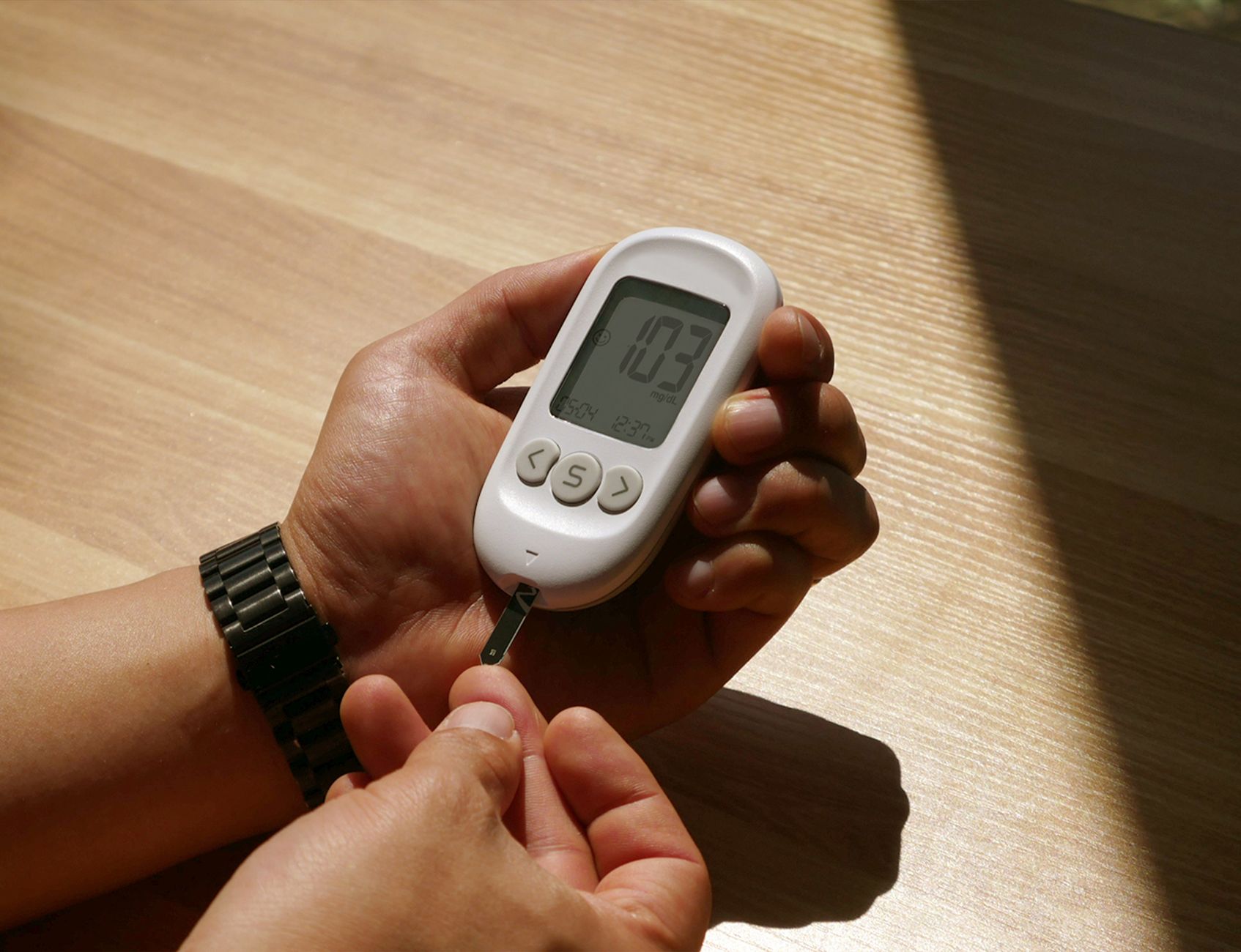
- How to Run a Fingerstick Glucose Check the Right Way
- What Your Home Readings Actually Mean
- Home A1C Kits and CGMs: Useful Screening Tools, Not Diagnoses
- Five Mistakes That Make Home Readings Wrong
- Symptoms That Mean You Should Not Wait for a Test Result
- When to Stop Testing at Home and Call a Clinician
- Frequently Asked Questions
The 8-Point At-Home Diabetes Checklist
Roughly 38.4 million Americans have diabetes, and about 8.7 million of them do not know it[1]. Another 97.6 million adults have prediabetes[1]. Those numbers explain why so many people buy a meter or an A1C kit before ever seeing a clinician. Home testing is genuinely useful for flagging a problem early — but only if it is done in a structured way rather than as a single anxious fingerstick after a large meal.
Work through these eight items in order. The goal is not one number; it is a reproducible pattern you can hand to a physician.
A normal home reading does not rule out diabetes, and an abnormal one does not confirm it. Home devices are screening tools. Diagnosis requires a laboratory plasma glucose measurement, an oral glucose tolerance test, or a laboratory A1C — repeated or confirmed, unless you have clear symptoms plus a random glucose of 200 mg/dL or higher[2].
How to Run a Fingerstick Glucose Check the Right Way
Technique accounts for more inaccurate home readings than meter quality does. A 2019-style comparison of consumer devices found that even regulated meters are permitted a margin of error — regulatory accuracy standards allow roughly a 15% variance at higher glucose concentrations[3] — so sloppy technique on top of that margin can push a normal reading into a false alarm, or hide a genuinely high one.
What Your Home Readings Actually Mean
The thresholds below are the American Diabetes Association's diagnostic cut points for venous plasma and laboratory A1C[2]. They are the numbers clinicians use, and they are the numbers you should compare your home results against — with one important caveat: a fingerstick meter measures capillary whole blood, not venous plasma, so a home value that lands exactly on a cutoff is suggestive rather than conclusive.
| Test | Normal | Prediabetes | Diabetes range (needs confirmation) |
|---|---|---|---|
| Fasting plasma glucose (mg/dL) | Below 100 | 100–125 | 126 or higher |
| Fasting glucose (mmol/L) | Below 5.6 | 5.6–6.9 | 7.0 or higher |
| 2-hour glucose during oral glucose tolerance test (mg/dL) | Below 140 | 140–199 | 200 or higher |
| Hemoglobin A1C (%) | Below 5.7 | 5.7–6.4 | 6.5 or higher |
| Random glucose (mg/dL) with classic symptoms | — | — | 200 or higher |
Two details change how you should read this table. First, the ADA requires a second abnormal result — a repeat of the same test on a different day, or a different confirmatory test — before diagnosing diabetes in someone without symptoms[2]. Second, the "prediabetes" band is not a waiting room with no exits. Structured lifestyle programs that combine 150 minutes of weekly activity with a 7% body-weight reduction cut the risk of progressing to type 2 diabetes by 58% in adults at high risk[4]. That is a larger effect than most medications achieve.
A practical interpretation rule: if your fasting fingerstick is under 100 mg/dL on two mornings and your A1C is under 5.7%, your screening is reassuring and you can retest annually. If fasting lands between 100 and 125 mg/dL, or A1C lands between 5.7% and 6.4%, you are in the prediabetes range and should arrange a laboratory confirmation. If fasting is 126 mg/dL or higher on two separate mornings, or A1C is 6.5% or higher, book a clinical appointment this week rather than repeating home tests indefinitely.
Home A1C Kits and CGMs: Useful Screening Tools, Not Diagnoses
Over-the-counter A1C kits have become the most convenient home screening option because they require no fasting, no fingerstick technique, and no timing around meals. A drop of blood is applied to a card or cartridge, and the result reflects average glucose exposure over the previous two to three months. The FDA has cleared several of these kits for home use[3], which means they meet a baseline accuracy standard — but "cleared for home use" is not the same as "approved for diagnosis."
A1C also has well-known blind spots that the ADA explicitly flags[2]. The test can read falsely low or falsely high when red blood cells live longer or shorter than usual. That happens with iron deficiency anemia, sickle cell trait and other hemoglobin variants, chronic kidney disease, recent blood transfusion, and pregnancy. If any of those apply to you, an A1C — home or laboratory — is the wrong screening tool, and a fasting or oral glucose tolerance test is more reliable.
Where continuous glucose monitors fit
Continuous glucose monitors measure glucose in interstitial fluid rather than blood, updating every one to five minutes. They are primarily prescribed for people with diabetes to guide treatment decisions, and the FDA has also cleared over-the-counter sensor versions for adults who do not use insulin[3]. Because interstitial glucose lags blood glucose by roughly 5 to 15 minutes, a sensor will read lower than a fingerstick during a rapid rise after eating, and higher during a rapid fall.
That lag makes CGMs excellent for spotting patterns — a high overnight plateau, a consistent post-breakfast spike, a dawn rise — and poor for self-diagnosis. If a borrowed or purchased sensor shows values consistently above 180 mg/dL after meals, treat it as a reason to get laboratory testing, not as a diagnosis in itself. Bring the sensor report with you; clinicians can read trend data that a single number cannot convey.
Five Mistakes That Make Home Readings Wrong
Most "shocking" home readings come from a preventable error rather than a change in your health. These five account for the majority of distorted results.
- Testing too soon after eating. A one-hour post-meal reading can be 40 to 60 mg/dL higher than the two-hour value. Unless you are deliberately checking a two-hour post-meal number, wait at least eight hours from your last calorie.
- Unwashed hands. Fruit juice, soda, and even a ripe banana leave sugar residue that dissolves into the sample. Warm soapy water and thorough drying remain the single highest-yield fix.
- Squeezing or "milking" the fingertip. This dilutes blood with interstitial fluid and produces a falsely low result — the dangerous direction of error, because it can mask a real problem.
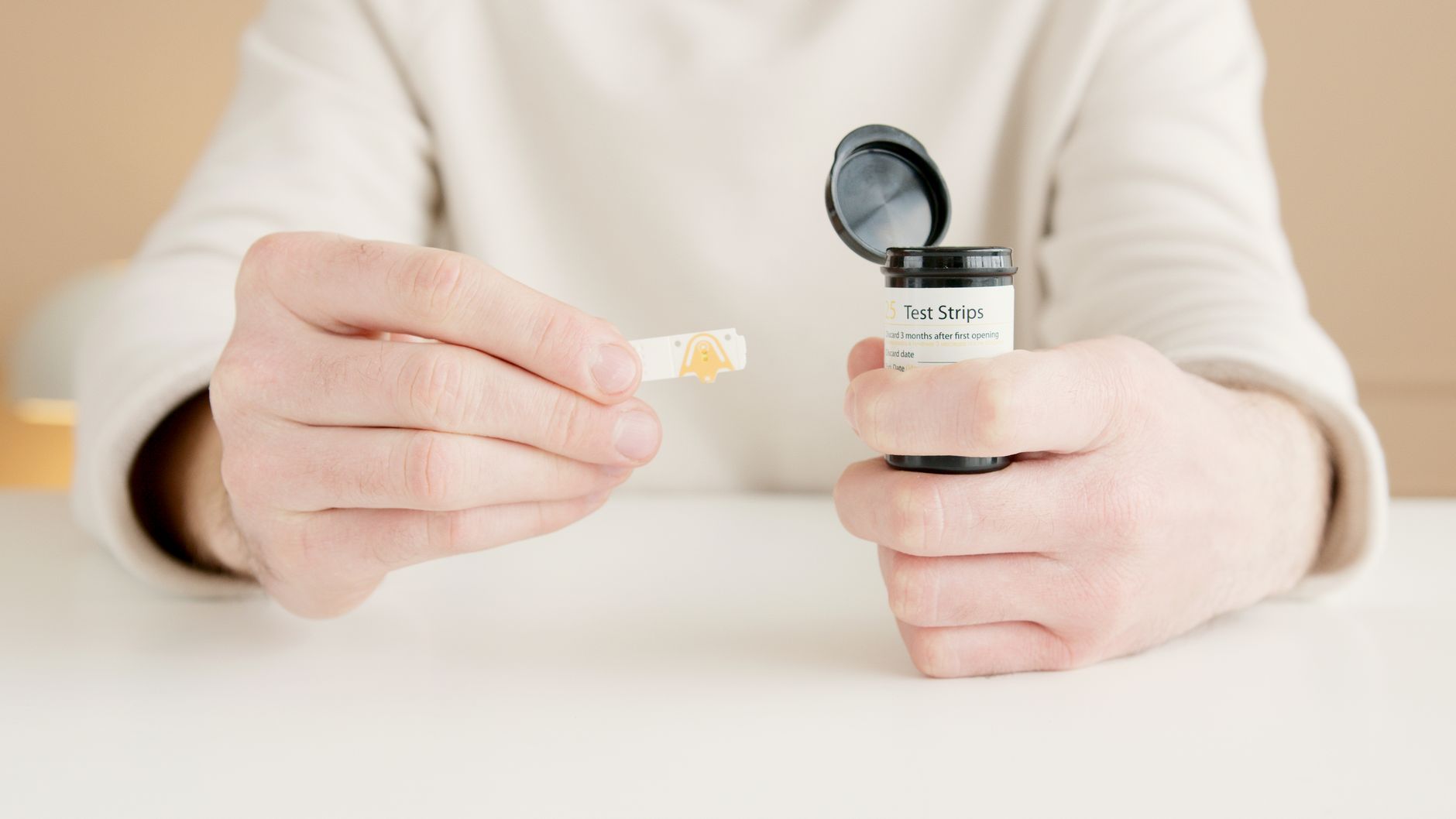
- Expired or badly stored strips. Heat, humidity, and an open vial in a bathroom cabinet degrade the enzyme coating on the strip. Check the expiry date monthly and store strips in a cool, dry place.
- Testing during acute illness or after steroid use. Infection, injury, and glucocorticoids all raise glucose transiently. A single high reading during a bad cold is not evidence of diabetes.
A well-run home screen produces a small dataset, not a single dramatic number. Fast 8 to 12 hours, test at the same time on two or three consecutive mornings, repeat any outlier once on a different finger with a fresh strip, and record everything in one place — values, times, fasting hours, meals, sleep, illness, and medications. Add one two-hour post-meal reading from a typical meal. Then average your fasting values and note the range. A log showing three fasting readings between 112 and 128 mg/dL is far more actionable to a clinician than one reading of 134 taken after a sleepless night.
One more caution that applies to every device: home meters are calibrated for whole blood and are permitted a meaningful margin of error[3]. That means a reading of 124 mg/dL might represent a true value anywhere from roughly 105 to 143 mg/dL. Treat borderline numbers as a prompt to gather more data, not as a verdict.
Symptoms That Mean You Should Not Wait for a Test Result
Home testing is for people who feel well enough to plan. Certain symptoms change the calculus entirely: they mean you should be evaluated the same day, because untreated very high glucose can progress to a diabetic emergency within hours.
If any of these apply, skip the checklist and contact a clinician or emergency service. A meter reading can be useful context to share with the care team, but it should never delay care.
When to Stop Testing at Home and Call a Clinician
Home screening has done its job the moment it produces a result you cannot interpret or that needs confirmation. Escalate promptly in any of the following situations.
- Two separate fasting fingerstick readings are 126 mg/dL (7.0 mmol/L) or higher.
- A home A1C kit reads 6.5% or higher, or a home A1C reads between 5.7% and 6.4% and you have not had laboratory testing.
- A random reading is 200 mg/dL or higher at any time of day, with or without symptoms.
- A reading is above 300 mg/dL, or above 240 mg/dL with any of the warning symptoms listed above.
- You have symptoms of high glucose but your home readings keep coming back normal — symptoms matter more than a borderline number.
- You are pregnant, planning pregnancy, or had gestational diabetes in a prior pregnancy. Screening thresholds and the tests used differ in pregnancy and home devices are not appropriate for diagnosis.
The ADA recommends screening all adults beginning at age 35, and earlier for anyone with overweight or obesity plus one or more additional risk factors. Repeat screening at a minimum of three-year intervals when results are normal, and annually when results fall in the prediabetes range[2].
What happens next is straightforward and inexpensive. A clinician will order a venous fasting plasma glucose, a laboratory A1C, or a two-hour oral glucose tolerance test — usually one test first, with a second confirmatory test if the first is abnormal. If you are diagnosed, the conversation moves quickly to treatment; if you are not, you leave with a clear retest interval and a realistic prevention plan rather than a folder of ambiguous home readings.
Frequently Asked Questions
Can a home glucose meter diagnose diabetes?
No. Consumer meters measure capillary whole blood and are permitted a meaningful margin of error under regulatory accuracy standards[3]. The ADA requires diagnosis using venous plasma glucose, an oral glucose tolerance test, or a laboratory A1C — and, in people without symptoms, confirmation with a second abnormal test[2]. A meter can tell you to get tested; it cannot tell you that you have diabetes.
How accurate are over-the-counter A1C test kits?
FDA-cleared home A1C kits are generally reliable to within a few tenths of a percentage point when used correctly, which is why a result of 6.5% or higher is meaningful[3]. Accuracy drops with improper sample collection, and the underlying A1C measurement itself can be misleading in anemia, hemoglobin variants, pregnancy, recent transfusion, and advanced kidney disease[2]. If any of those apply, ask for a fasting glucose or oral glucose tolerance test instead.
Can I check for diabetes with a urine test?
Urine glucose strips exist, but they are a poor screening tool. Glucose generally does not appear in urine until blood glucose exceeds roughly 180 mg/dL, so urine testing misses prediabetes and early diabetes entirely, and it cannot quantify how high your glucose is. Urine ketone strips have a legitimate role in monitoring people already diagnosed with diabetes during illness, but neither strip type is recommended for initial screening.
What time of day should I test at home?
Fasting glucose is most consistent first thing in the morning, after at least eight hours without calories. Testing at the same time on consecutive days removes a major source of variability. Two-hour post-meal readings should be timed from the start of the meal, not from when you finish eating.
If my home readings are normal, can I rule out diabetes?
Not completely. A normal fasting fingerstick can miss diabetes that shows up only after a carbohydrate load, and a single normal A1C can miss early glucose intolerance. If you have genuine symptoms — excessive thirst, frequent urination, unexplained weight loss, blurred vision — pursue laboratory testing regardless of how your home readings look. The ADA's diagnostic criteria exist precisely because no single normal value is definitive[2].
How often should I screen at home if I am at high risk?
The ADA recommends annual screening for anyone whose results fall in the prediabetes range and repeat screening at least every three years for adults with normal results starting at age 35[2]. Home testing does not need to be continuous — a structured three-day check once or twice a year, paired with an annual laboratory A1C, gives you more useful information than sporadic daily fingersticks.
I have prediabetes-range readings. What actually helps?
Structured lifestyle change is the highest-yield intervention. CDC-recognized National Diabetes Prevention Program curricula, which combine 150 minutes of moderate activity per week with a 5% to 7% body-weight reduction, reduce progression to type 2 diabetes by 58% in high-risk adults[4]. That effect has held up across age groups and is larger than the effect of most single medications studied for prevention.
- Home screening can be done with a fingerstick glucose meter, an FDA-cleared over-the-counter A1C kit, or an over-the-counter continuous glucose monitor — but none of these devices can diagnose diabetes.
- The ADA's diagnostic cut points are a fasting glucose of 126 mg/dL (7.0 mmol/L) or higher, a two-hour glucose of 200 mg/dL or higher, or an A1C of 6.5% or higher — and require confirmation with a second test in people without symptoms.
- Prediabetes ranges are fasting 100–125 mg/dL, two-hour glucose 140–199 mg/dL, and A1C 5.7–6.4%; structured lifestyle programs reduce progression to type 2 diabetes by about 58% in high-risk adults.
- Two or three fasting readings on separate mornings, plus one two-hour post-meal reading, give a clinician more usable information than a single number.
- Meter readings carry a meaningful accuracy margin, and A1C results are unreliable in anemia, hemoglobin variants, pregnancy, recent transfusion, and kidney disease.
- Symptoms such as fruity breath, vomiting, deep rapid breathing, confusion, or drowsiness alongside high glucose require emergency care, not more home testing.
- Centers for Disease Control and Prevention, National Diabetes Statistics Report — prevalence of diagnosed and undiagnosed diabetes and prediabetes among U.S. adults.
- American Diabetes Association, Standards of Care in Diabetes—2026 — diagnostic criteria and screening recommendations, Section 2: Diagnosis and Classification of Diabetes.
- U.S. Food and Drug Administration, blood glucose monitoring devices and over-the-counter A1C and CGM clearances — device accuracy standards and home-use clearances.
- Centers for Disease Control and Prevention, National Diabetes Prevention Program — evidence base for lifestyle intervention and risk reduction.
- MedlinePlus, Diabetic Ketoacidosis and Hyperosmolar Hyperglycemic State — emergency warning signs and clinical presentation.