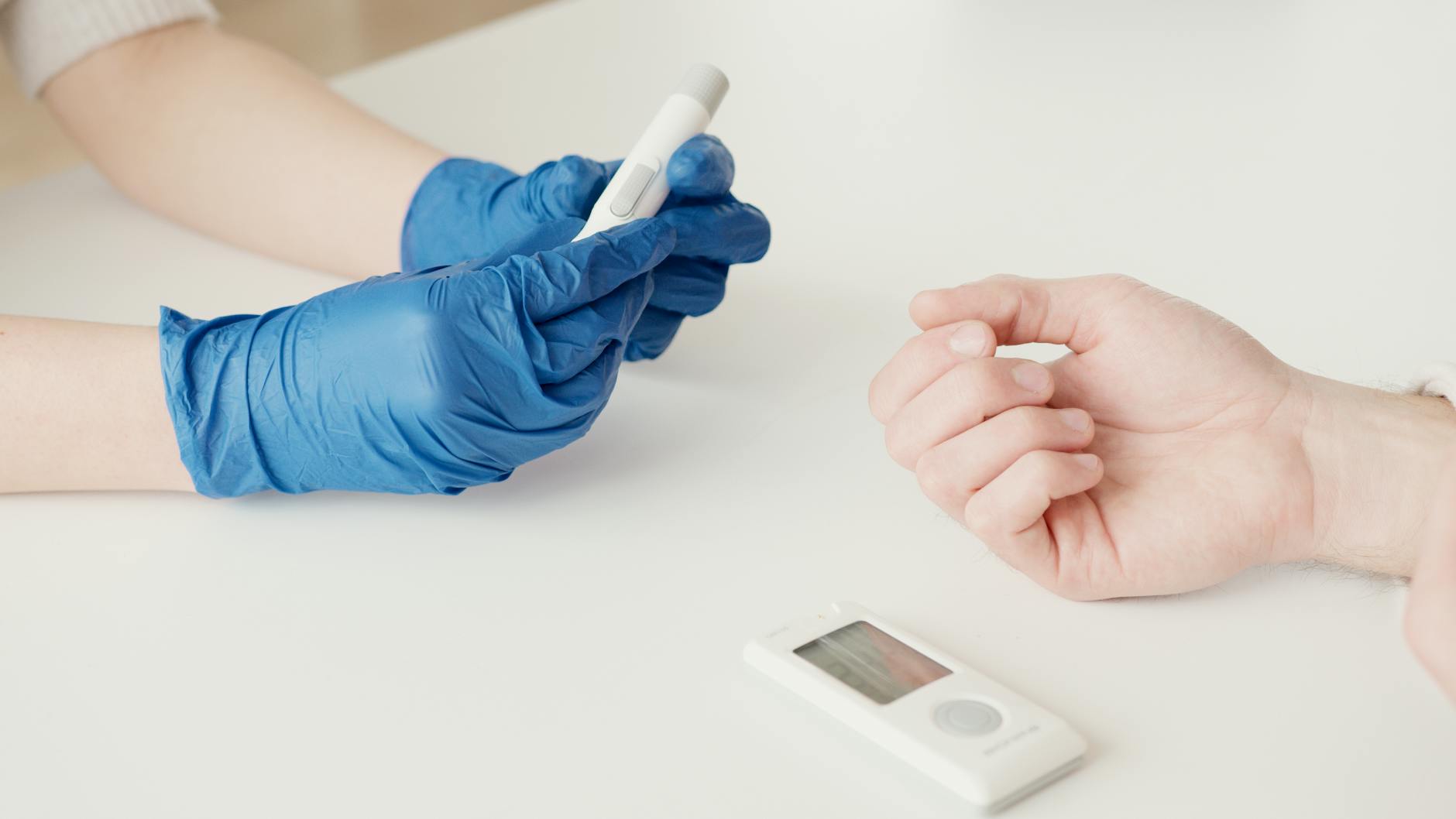
More than 1 in 3 U.S. adults has prediabetes, yet 80% don't know it. The American Diabetes Association's latest Standards of Care clarify exactly what an A1C of 5.7–6.4% means — and what actions actually lower your risk.
The ADA defines prediabetes as an A1C of 5.7–6.4% (39–47 mmol/mol). This range indicates dysglycemia — blood sugar above normal but below the diabetes threshold of 6.5%. The 2025 ADA Standards of Care recommend annual A1C monitoring for anyone in this range, plus structured lifestyle intervention as first-line therapy. Metformin is advised for those with BMI ≥35, age <60, or a history of gestational diabetes. Without intervention, 5–10% of people with prediabetes progress to type 2 diabetes each year.
What the ADA Recommends for A1C 5.7–6.4
The American Diabetes Association's 2025 Standards of Care in Diabetes maintain the long-standing diagnostic threshold for prediabetes: an A1C between 5.7% and 6.4%. This range identifies a state of intermediate hyperglycemia where glucose regulation is impaired but has not yet crossed into diabetes territory. The following are the key recommendations from the 2025 update.
Diagnostic criterion: A1C 5.7–6.4% (39–47 mmol/mol) is classified as prediabetes. This is equivalent to impaired fasting glucose (IFG) of 100–125 mg/dL or impaired glucose tolerance (IGT) of 140–199 mg/dL on a 2-hour oral glucose tolerance test. Any one of these three criteria establishes the diagnosis.
Screening initiation: Begin screening at age 35 for all adults who are overweight or obese (BMI ≥25 kg/m²). Earlier screening — at any age — is recommended for those with additional risk factors: first-degree relative with diabetes, history of gestational diabetes, polycystic ovary syndrome, high-risk race/ethnicity (African American, Latino, Native American, Asian American, Pacific Islander), hypertension, HDL <35 mg/dL or triglycerides >250 mg/dL, or cardiovascular disease.
Monitoring frequency: For individuals with confirmed prediabetes (A1C 5.7–6.4%), test A1C at least annually. More frequent testing — every 3 to 6 months — is reasonable if the A1C is near the upper end of the range (6.0–6.4%), if weight is increasing, or if a person is not meeting lifestyle goals.
Intervention — lifestyle first: Refer all patients with prediabetes to an intensive behavioral lifestyle intervention program modeled on the Diabetes Prevention Program (DPP) — a structured curriculum that targets ≥7% weight loss and ≥150 minutes per week of moderate physical activity. The goal is to reduce the risk of progression to type 2 diabetes by 58% (71% in those over age 60).
Pharmacotherapy when indicated: Metformin should be considered for people with prediabetes who have a BMI ≥35 kg/m², are younger than 60 years, or have a history of gestational diabetes. The ADA also notes that metformin is associated with a 31% relative risk reduction for progression to diabetes in the DPP trial, and it is the only medication recommended specifically for prediabetes in the current guidelines.
The ADA emphasizes that an A1C of 5.7–6.4% does not mean diabetes is inevitable. In the DPP trial, lifestyle intervention reduced progression by 58%, and the benefits persisted for at least 15 years in long-term follow-up. The window for meaningful prevention is open — but it narrows as A1C drifts closer to 6.5%.
What Changed in the 2025 Standards
The 2025 ADA Standards of Care did not overhaul the prediabetes framework, but several key updates refined who gets screened, how often, and which pharmacologic options are endorsed.
Lowered screening age. In 2023, the ADA reduced the recommended screening age from 40 to 35. The 2025 update reinforces this change with stronger language: screening at age 35 is now a Grade A recommendation — the highest level of evidence. This shift alone could identify an additional 5 million U.S. adults with undiagnosed prediabetes, according to CDC modeling cited in the guidelines.
Expanded risk-based screening language. The 2025 update adds a new emphasis on screening at any age for individuals from high-risk racial and ethnic groups, regardless of BMI. This responds to evidence that these populations develop prediabetes at younger ages and lower BMIs compared to white counterparts.
Metformin guidance refined. Previous versions recommended metformin "especially" for those with BMI ≥35, age <60, or history of GDM. The 2025 version upgrades this language: metformin "should be considered" — a more active recommendation — and the ADA now explicitly states that the benefit is strongest in those under 60 with BMI ≥35. The guideline also clarifies that metformin is not recommended for prediabetes in adults over 75 due to a lack of trial data in this age group.
Emphasis on social determinants. New in 2025, the ADA includes a dedicated section on social determinants of health in prediabetes management, acknowledging that food insecurity, neighborhood walkability, and access to preventive care directly affect who progresses. The guidelines now recommend that clinicians screen for these barriers and connect patients with community-based resources.
| Parameter | 2022–2024 Guidance | 2025 Update |
|---|---|---|
| Screening start age | 40 (Grade B) | 35 (Grade A) |
| Annual monitoring for prediabetes | Strongly recommended | Reaffirmed; 3–6 month intervals if A1C ≥6.0% |
| Metformin indication | "Consider" for BMI ≥35, age <60, GDM history | "Should be considered" for same groups; not recommended >75 |
| Social determinants | Mentioned in general text | Dedicated subsection with screening and referral guidance |
The Evidence Behind the 5.7–6.4 Range
Why does the ADA define prediabetes at 5.7%? The threshold was not chosen arbitrarily — it traces back to epidemiological data showing that the risk of progressing to diabetes begins to accelerate noticeably above an A1C of 5.7%, and that microvascular complications (such as early diabetic retinopathy) start to appear in population studies at roughly the same point.
The linear relationship between A1C and incident diabetes. A landmark analysis published in the New England Journal of Medicine (Selvin et al., 2010) examined data from over 11,000 adults without diabetes and found that the 5-year risk of developing diabetes rose from 1% at an A1C of 5.0% to 25% at an A1C of 6.0%. The curve steepens sharply above 6.0%, reinforcing the ADA's emphasis on frequent monitoring for those in the 6.0–6.4% subrange.
Why 5.7% specifically? The 5.7% cutoff was selected because it corresponds to the inflection point where the prevalence of retinopathy precursors begins to rise in multiple cross-sectional studies. The ADA's expert panel reviewed data from the NHANES database and the Diabetes Prevention Program outcomes to set a threshold that balances sensitivity (catching people at risk) with specificity (not labeling too many people as having a condition they will not develop).
The A1C test itself: strengths and caveats. A1C reflects average glycemia over approximately 3 months. It is convenient — no fasting required — and has lower day-to-day variability than a fasting glucose test. However, the ADA notes that A1C is less reliable in certain conditions: hemoglobin variants (sickle cell trait, thalassemia), anemia, chronic kidney disease, pregnancy, and recent blood transfusion. In these cases, fasting glucose or an oral glucose tolerance test is preferred for diagnosing prediabetes.
The single best predictor of progression from prediabetes to diabetes is the A1C value itself — each 0.1% increase above 5.7% corresponds to a measurable rise in annual conversion risk.
— Diabetes Prevention Program Research Group, 2012
Annual conversion rates by A1C level. Not all prediabetes is equal. A person with an A1C of 5.7% has a roughly 5% annual risk of progressing to diabetes, while someone at 6.2% has an annual risk closer to 15–20%. This gradient is why the ADA recommends more frequent monitoring — and more aggressive intervention — for those at the higher end of the range.
What It Means for You: A Practical Action Plan
If your A1C came back between 5.7% and 6.4%, here is exactly what the ADA guidelines suggest you do — in actionable steps.
In the DPP study, participants who lost ≥7% of body weight and maintained ≥150 minutes of weekly physical activity reduced their risk of progressing to type 2 diabetes by 58% — and those over 60 cut their risk by 71%. Some participants saw their A1C return to below 5.7%, effectively reversing the prediabetic state. Sustained lifestyle change is the single most powerful tool you have.
ADA vs. AACE: Where the Guidelines Diverge
The American Diabetes Association is not the only organization that issues prediabetes guidance. The American Association of Clinical Endocrinologists (AACE) publishes its own framework, and the two differ in meaningful ways. Understanding the differences can help you interpret conflicting messages you may encounter.
Prediabetes A1C range: 5.7–6.4%
Primary intervention: Lifestyle (DPP-modeled)
Metformin threshold: BMI ≥35, age <60, or GDM history
Monitoring: At least annually; every 3–6 months if A1C ≥6.0%
Screening age: 35 for all with BMI ≥25
Prediabetes A1C range: 5.5–6.4%
Primary intervention: Lifestyle plus risk-stratified pharmacotherapy
Metformin threshold: Consider at any BMI if glycemia is rising
Monitoring: Every 3–6 months regardless of baseline A1C
Screening age: 30 for high-risk groups; 45 for all others
If your A1C falls between 5.5% and 5.6%, ADA guidelines do not classify you as having prediabetes, while AACE does. In practice, most U.S. clinicians follow the ADA criteria because the ADA Standards of Care are the most widely adopted, are referenced by the CDC and Medicare, and form the basis of the National DPP eligibility criteria. If your A1C is 5.5–5.6% and you have other risk factors (family history, PCOS, high BMI), many endocrinologists would still recommend lifestyle intervention — even if the formal diagnosis of prediabetes is not assigned.
Frequently Asked Questions
Can an A1C of 5.7% go back to normal?
Yes. A1C is not a fixed value — it reflects your average glucose over the prior 2–3 months and can improve with lifestyle changes. In the DPP trial, approximately 30% of participants in the lifestyle arm achieved an A1C below 5.7% at their 3-year follow-up. Weight loss of 5–7%, increased physical activity, and dietary improvements are all associated with measurable reductions in A1C. The earlier you intervene, the more likely you are to reverse the trajectory.
Is prediabetes the same as "borderline diabetes"?
"Borderline diabetes" is an informal term that some clinicians use to describe prediabetes, but it is not a formal diagnosis. The ADA and AACE do not use the term. Using "borderline" can unintentionally minimize the seriousness of the condition — prediabetes is a clear, measurable metabolic state with a known risk of progression. The 2025 ADA guidelines explicitly advise against language that implies prediabetes is "not quite diabetes" or "just a little high."
How often should I check A1C if my result is 6.2%?
At 6.2%, you are in the upper half of the prediabetes range, and the ADA recommends testing every 3 to 6 months rather than annually. The rationale is that the risk of crossing the 6.5% threshold is significantly higher at this level — approximately 15–20% per year without intervention. More frequent testing allows for faster detection of progression and a prompt adjustment of treatment. If you are also making lifestyle changes, testing every 3 months lets you see the impact of your efforts with less lag time.
Does the ADA recommend home glucose monitoring for prediabetes?
Routine self-monitoring of blood glucose is not recommended by the ADA for people with prediabetes in the 2025 Standards. The guideline states that there is insufficient evidence that daily finger-stick testing improves outcomes in this population. However, the ADA acknowledges that some clinicians use periodic structured glucose monitoring (e.g., checking fasting glucose 1–2 times per week for several weeks) to provide patients with real-time feedback on how dietary and activity changes affect their levels. Continuous glucose monitoring (CGM) is also not currently recommended for prediabetes alone, though research is ongoing.
What is the difference between A1C and fasting glucose for diagnosing prediabetes?
A1C is a 3-month average of your blood glucose and does not require fasting. Fasting plasma glucose (FPG) measures your blood sugar at a single point in time after at least 8 hours without food. The ADA considers both valid for diagnosis, along with the 2-hour oral glucose tolerance test. The three criteria are not perfectly concordant — about 30% of people with prediabetes by one criterion will not meet the other criteria. For this reason, the ADA recommends using the same test for confirmation and monitoring, rather than switching between methods. A1C is generally preferred for convenience, but FPG or OGTT should be used if A1C may be unreliable due to hemoglobin variants, anemia, or kidney disease.
Does the 2025 ADA guideline recommend vitamin D or other supplements for prediabetes?
No. The 2025 ADA Standards of Care do not recommend vitamin D, chromium, magnesium, berberine, cinnamon, or any other dietary supplement for the prevention or treatment of prediabetes. The ADA notes that large randomized trials — including the D2d study (vitamin D, published in the New England Journal of Medicine, 2019) — found no significant reduction in progression to diabetes with vitamin D supplementation in people with prediabetes. The only proven interventions are lifestyle modification and, in select groups, metformin.
- An A1C of 5.7–6.4% defines prediabetes per the ADA's 2025 Standards of Care — this range reflects impaired glucose regulation that raises the risk of progression to type 2 diabetes.
- Without intervention, 5–10% of people with prediabetes progress to diabetes each year; the risk is higher for those with A1C in the 6.0–6.4% range.
- The ADA recommends annual A1C monitoring for all individuals with prediabetes, with more frequent testing (every 3–6 months) if A1C is 6.0% or higher.
- Structured lifestyle intervention modeled on the Diabetes Prevention Program — targeting ≥7% weight loss and ≥150 minutes of weekly physical activity — reduces progression risk by 58% and is the first-line treatment.
- Metformin is recommended for those with BMI ≥35, age <60, or a history of gestational diabetes; it reduces progression risk by 31% in these groups.
- The ADA and AACE differ on the lower diagnostic cutoff (5.7% vs. 5.5%) and on how aggressively to recommend pharmacotherapy — most U.S. clinicians follow the ADA framework.