Nearly half of U.S. adults have hypertension, yet only 1 in 4 have it under control. These 7 evidence-based lifestyle changes target the root drivers of elevated blood pressure — without requiring a prescription.
To lower blood pressure naturally, focus on seven core levers: reduce sodium to under 1,500 mg/day, adopt the DASH diet, achieve 150+ minutes of moderate aerobic activity weekly, maintain a waist circumference under 40 inches (men) or 35 inches (women), limit alcohol to 1–2 drinks per day, manage stress with a structured technique (e.g., 10-minute daily meditation), and get 7–8 hours of quality sleep per night. The AHA/ACC 2025 Hypertension Guideline confirms these interventions can lower systolic BP by 8–20 mmHg within 4–12 weeks.
- The 7-Point Natural BP Reduction Checklist
- 1. Cut Sodium — The Single Highest-Impact Step
- 2. Adopt the DASH or Mediterranean Diet
- 3. Move Your Body — Aerobic & Resistance Training
- 4. Lose Weight & Shrink Waist Circumference
- 5. Limit Alcohol & Eliminate Tobacco
- 6. Manage Stress With a Daily Practice
- 7. Prioritize Deep, Consistent Sleep
- Common Mistakes That Sabotage Natural BP Efforts
- What 'Doing It Right' Looks Like — A Sample Day
- When to Escalate to a Doctor
- Frequently Asked Questions
The 7-Point Natural BP Reduction Checklist
Each item below is independently supported by the AHA/ACC 2025 Hypertension Guideline and the 2024-2025 Dietary Guidelines for Americans. Combined, these seven changes lower systolic blood pressure by an average of 12–18 mmHg — comparable to a single low-dose antihypertensive medication.
1. Cut Sodium — The Single Highest-Impact Step
The link between sodium and blood pressure is linear: the more sodium you consume, the higher your BP tends to rise. According to the CDC's 2024 Sodium Reduction Report, the average American consumes about 3,400 mg of sodium per day — more than double the 1,500 mg upper limit recommended by the AHA for adults with hypertension.
Where sodium hides (and how to spot it)
Over 70% of dietary sodium in the U.S. comes from restaurant and packaged foods — not the salt shaker. The worst offenders:
- Breads and rolls — 7% of total sodium intake (often overlooked)
- Cold cuts and cured meats — up to 1,000 mg per 3-ounce serving
- Pizza and fast-food sandwiches — 600–1,200 mg per serving
- Canned soups and sauces — 700–900 mg per cup
- Salad dressings and condiments — 200–400 mg per tablespoon
The 3-step sodium reduction protocol
A 55-year-old man with stage 1 hypertension (135/85 mmHg) reduced his sodium from 3,800 mg/day to 1,400 mg/day over 6 weeks by eliminating restaurant lunches, reading labels, and cooking at home. His systolic BP dropped 9 mmHg without medication.
2. Adopt the DASH or Mediterranean Diet
The DASH (Dietary Approaches to Stop Hypertension) diet has been the gold-standard eating pattern for BP reduction since the original NIH-funded trial in 1997. The 2025 AHA/ACC Guideline reaffirms DASH as first-line dietary therapy, with a class 1A recommendation (strongest evidence).
What the DASH diet looks like on a plate
The DASH pattern is not high-protein or low-carb — it's a balanced, high-fiber, lower-saturated-fat approach:
| Food Group | Daily Servings (2,000-calorie plan) | Examples |
|---|---|---|
| Vegetables | 4–5 servings | Leafy greens, broccoli, bell peppers, tomatoes |
| Fruits | 4–5 servings | Berries, apples, oranges, bananas |
| Whole grains | 6–8 servings | Oats, quinoa, brown rice, whole-wheat bread |
| Low-fat dairy | 2–3 servings | Skim milk, plain yogurt, reduced-fat cheese |
| Lean protein | ≤6 servings | Chicken breast, fish, legumes, tofu |
| Nuts, seeds, legumes | 4–5 per week | Almonds, walnuts, lentils, chickpeas |
| Fats & oils | 2–3 servings | Olive oil, avocado, nut butters |
| Sweets & added sugar | ≤5 per week | Maple syrup, dark chocolate, fruit sorbet |
The PREMIER trial showed that combining DASH with sodium restriction and behavioral counseling lowered systolic BP by 12.6 mmHg over 6 months — comparable to a standard-dose thiazide diuretic.
DASH is rich in potassium (from fruits and vegetables), which lowers BP by increasing sodium excretion. However, if you have chronic kidney disease (CKD) or take certain medications (ACE inhibitors, ARBs, potassium-sparing diuretics), high potassium can be dangerous. Check eGFR and serum potassium with your doctor before significantly increasing potassium intake.
3. Move Your Body — Aerobic & Resistance Training
Physical activity lowers blood pressure through multiple mechanisms: it reduces systemic vascular resistance, improves endothelial function, lowers sympathetic nervous system activity, and promotes natriuresis (sodium excretion). The AHA/ACC 2025 guideline recommends ≥150 minutes per week of moderate-intensity aerobic activity plus 2–3 days per week of resistance training.
The BP-lowering effect by activity type
The 'exercise prescription' for BP reduction
4. Lose Weight & Shrink Waist Circumference
Excess adiposity — particularly visceral fat stored around the abdomen — drives hypertension through increased sympathetic activation, renin-angiotensin-aldosterone system (RAAS) activity, and inflammation. The 2025 AHA/ACC guideline states that weight loss of 5–10% of body weight consistently lowers systolic BP by 3–8 mmHg, with greater reductions at higher losses.
Why waist circumference matters more than BMI: Two people with the same BMI can have very different metabolic risk profiles. The INTERHEART study (2020 update) found that waist-to-hip ratio was a stronger predictor of cardiovascular events than BMI. For BP specifically, each 1 cm reduction in waist circumference is associated with a ~0.8 mmHg drop in systolic BP.
Targets and timelines
- Short-term goal (4–8 weeks): Lose 2–4% of body weight. Expect a 3–5 mmHg systolic BP drop.
- Medium-term goal (3–6 months): Lose 5–10% of body weight. Expect 5–8 mmHg systolic BP drop.
- Waist circumference target: <40 inches (102 cm) for men, <35 inches (88 cm) for women.
Visceral fat (the 'deep' belly fat) is metabolically active and directly contributes to hypertension. Subcutaneous fat (under the skin) is less harmful. The DASH diet combined with aerobic exercise preferentially reduces visceral fat — a 2024 MRI-based trial showed a 12% reduction in visceral adipose tissue over 16 weeks with this combination, versus 4% with diet alone.
5. Limit Alcohol & Eliminate Tobacco
Both alcohol and tobacco have direct, dose-dependent effects on blood pressure. The 2025 AHA/ACC guideline gives a class 1A recommendation to limit alcohol to ≤1 drink per day for women and ≤2 per day for men, and a class 1A recommendation for complete tobacco cessation.
Alcohol — the dose-response curve
A landmark 2024 meta-analysis in The Lancet including 1.3 million participants found that the relationship between alcohol and BP is linear — there is no 'protective' level for BP. Each additional 10 grams of pure alcohol per day (about 1 standard drink) raises systolic BP by 1.5 mmHg. At 3+ drinks per day, the increase accelerates to 3–4 mmHg per additional drink.
Tobacco — acute and chronic effects
Nicotine raises BP by 10–15 mmHg within minutes of smoking a cigarette through sympathetic activation. Over time, smoking accelerates atherosclerosis and stiffens arteries, causing a sustained BP elevation of about 5 mmHg systolic compared to non-smokers. Vaping (e-cigarettes) is not a safe alternative — a 2025 study in Hypertension Research found that chronic e-cigarette users had systolic BP values 4.2 mmHg higher than non-users, driven by nicotine and flavorant-induced endothelial dysfunction.
A 48-year-old woman drinking 3 glasses of wine most nights (about 45 g alcohol/day) reduced to 1 glass 3 nights per week (about 15 g/week on drinking days). Over 8 weeks, her systolic BP dropped from 142 mmHg to 132 mmHg — a 10 mmHg reduction attributable almost entirely to the alcohol cutback.
6. Manage Stress With a Daily Practice
Chronic stress elevates blood pressure through sustained sympathetic nervous system activation, increased cortisol, and inflammation. The 2025 AHA/ACC guideline includes stress management as a class 2a recommendation (moderate evidence), noting that structured techniques can lower systolic BP by 4–6 mmHg over 8–12 weeks.
What works — and what doesn't: A 2024 network meta-analysis ranked the following interventions by effectiveness for BP reduction:
- Mindfulness-based stress reduction (MBSR): Average 5.8 mmHg systolic drop — the strongest evidence.
- Guided slow breathing (≤6 breaths/min): 4.3 mmHg drop. The 'Relaxation Response' technique (Herbert Benson) works through vagal activation.
- Progressive muscle relaxation: 3.9 mmHg drop.
- Yoga (gentle, breath-focused styles): 3.5 mmHg drop.
- Listening to music (classical or ambient): 2.1 mmHg drop — modest but real.
A 10-minute daily protocol that works
7. Prioritize Deep, Consistent Sleep
Sleep is not a passive state for BP — during deep (NREM) sleep, blood pressure naturally dips by 10–20% compared to waking levels. This is called 'nocturnal dipping.' People who do not dip (non-dippers) have a 3-fold higher risk of cardiovascular events, independent of daytime BP.
The 2025 AHA/ACC guideline recommends 7–8 hours of quality sleep per night as a component of optimal cardiovascular health (part of the 'Life's Essential 8' framework). Short sleep (<6 hours) is associated with a 5–7 mmHg higher systolic BP, according to the 2024 National Sleep Foundation's Consensus Report.
Sleep hygiene checklist for BP reduction
Common Mistakes That Sabotage Natural BP Efforts
What 'Doing It Right' Looks Like — A Sample Day
Here is what a fully optimized day looks like for someone actively lowering BP naturally. This is a composite example, not a prescription:
"The combination of DASH eating, sodium restriction, and consistent exercise is equivalent to adding a low-dose thiazide diuretic and a moderate-dose ACE inhibitor — without the side-effect profile."
When to Escalate to a Doctor
Natural approaches are powerful, but they are not appropriate for everyone, and they are not always sufficient. You should seek medical evaluation if:
If your doctor prescribes antihypertensive medication, it does not mean you've 'failed' at natural approaches. Many patients require both lifestyle AND medication to reach target BP. In fact, lifestyle changes can lower the dose of medication needed (and reduce side effects), and some people can eventually step down or off medication if they sustain significant weight loss and dietary change. The goal is BP at target by any safe means — not a medication-free scorecard.
Frequently Asked Questions
How fast can I lower my blood pressure naturally?
Sodium reduction can lower BP within 1–2 weeks due to reduced plasma volume. The full effect of dietary changes (DASH), exercise, and weight loss takes 4–12 weeks. Stress reduction and sleep improvements work on a 6–8 week timescale. Most people see a cumulative drop of 8–18 mmHg systolic by week 12 if they follow all seven checklist items consistently.
Can I stop my BP medication once my BP is normal with lifestyle changes?
Only under medical supervision. Some people who achieve sustained weight loss (≥10% body weight), adopt DASH eating, and maintain normal BP for ≥6 months may be candidates for dose reduction or discontinuation — but abruptly stopping beta-blockers or clonidine can cause dangerous rebound hypertension. Work with your doctor to taper if appropriate. Never stop medication on your own.
Does coffee raise blood pressure?
Acute caffeine (within 30–60 minutes of consumption) can raise systolic BP by 3–8 mmHg in non-habitual users. However, habitual coffee drinkers develop tolerance, and large epidemiological studies (including the Nurses' Health Study) find no association between long-term coffee consumption and incident hypertension. The 2025 AHA/ACC guideline states that 1–2 cups per day is acceptable for most people with hypertension. If you have uncontrolled BP, check your BP 30 minutes after coffee to see if you are sensitive.
Is it better to check BP at home or at the doctor's office?
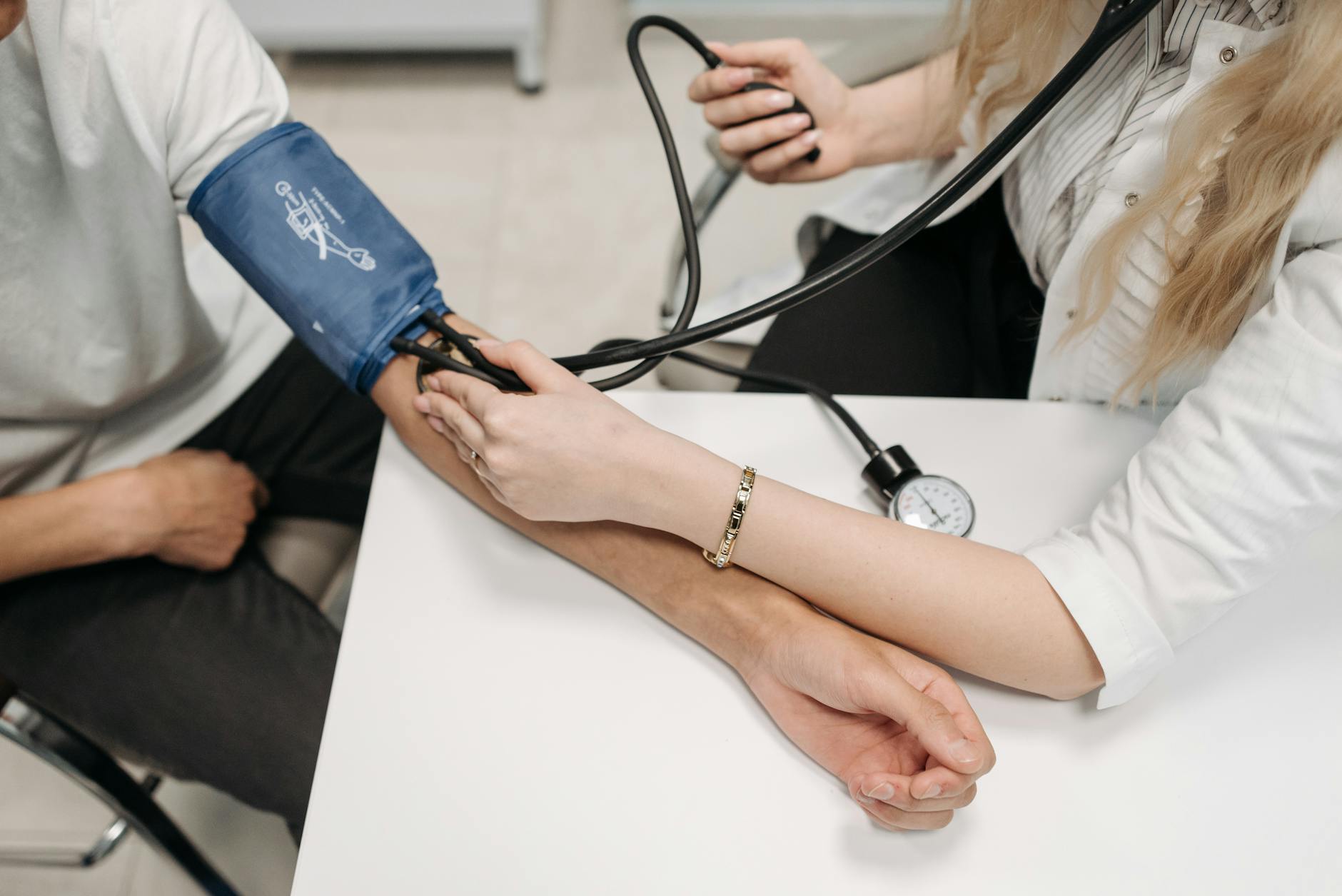
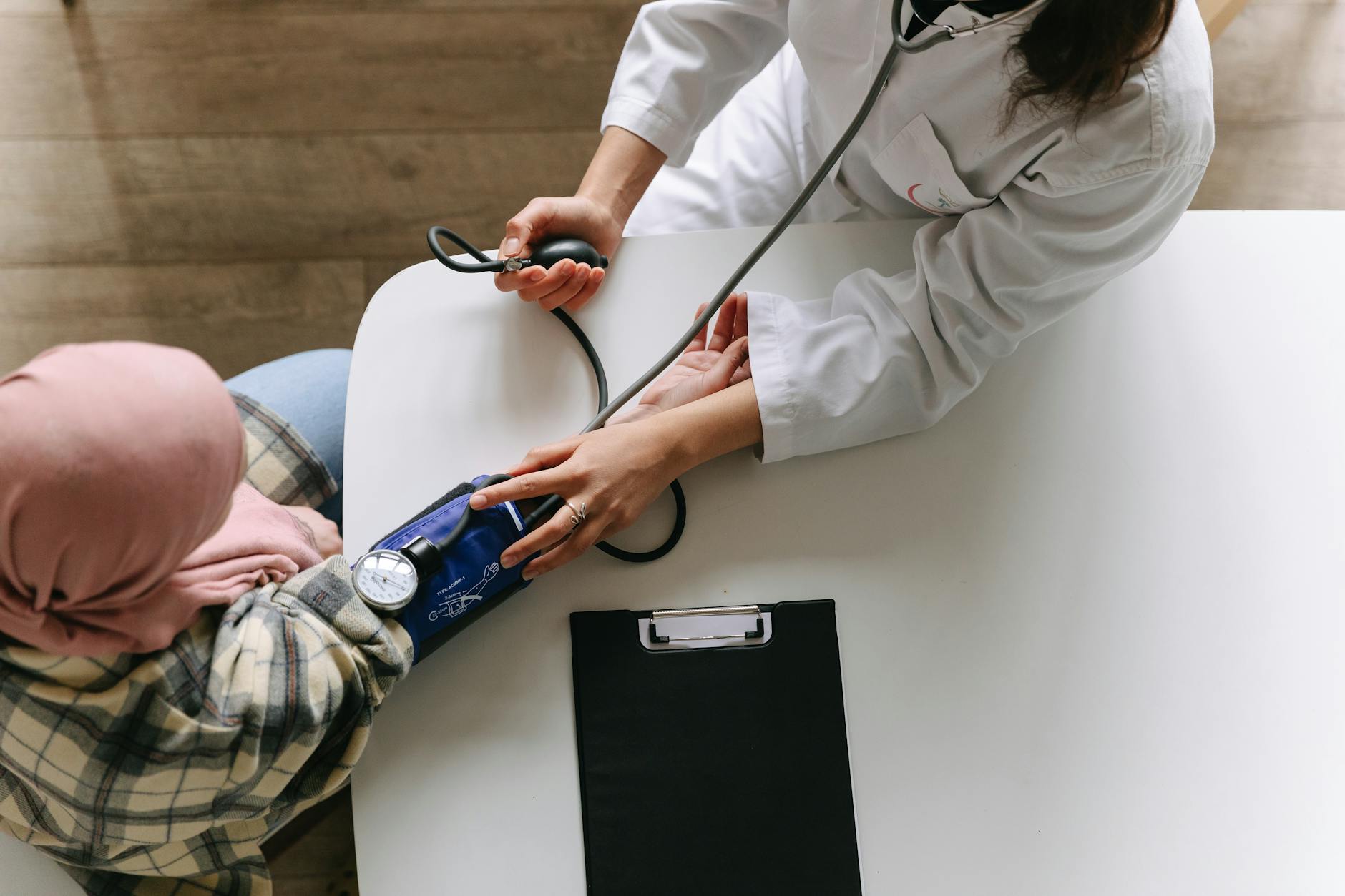
Home monitoring is more predictive of cardiovascular outcomes because it captures your true BP outside the 'white-coat effect' (the anxiety-driven spike in medical settings). The 2025 AHA/ACC guideline recommends home BP monitoring (HBPM) with a validated upper-arm cuff, taking readings twice daily (morning and evening) for 7 days to establish baseline. Ambulatory BP monitoring (24-hour wearable) is the gold standard but is reserved for diagnostic uncertainty.
Can potassium supplements lower BP?
The evidence is strongest for dietary potassium from fruits and vegetables — DASH naturally provides ~4,700 mg/day. Potassium supplements (e.g., potassium chloride) can lower BP by about 3–5 mmHg, but they carry risks: hyperkalemia (high potassium) in people with CKD or those taking ACE inhibitors/ARBs/potassium-sparing diuretics. The 2025 AHA/ACC guideline states that potassium supplementation should not be routinely used for BP management — food sources are safer and more effective. Do not take potassium supplements without checking kidney function and medication list with your doctor.
How does sleep apnea affect blood pressure?
Obstructive sleep apnea (OSA) causes repeated episodes of nighttime hypoxia and sympathetic activation, leading to nocturnal BP surges that can reach 200/110 mmHg during apneic events. Over time, this elevates 24-hour BP by 8–12 mmHg and converts 'dippers' into 'non-dippers' (who lack the normal nighttime BP drop). CPAP therapy reduces 24-hour systolic BP by 5–7 mmHg on average, with greater effects in patients with more severe OSA and who use CPAP ≥6 hours/night.
- Lowering sodium to <1,500 mg/day is the single most effective dietary step, reducing systolic BP by ~5 mmHg per 1,000 mg reduction.
- The DASH diet — rich in vegetables, fruits, whole grains, and low-fat dairy — with sodium restriction lowers systolic BP by 8–12 mmHg within 4–12 weeks.
- Combining 150+ minutes of moderate aerobic exercise plus 2 days/week resistance training lowers systolic BP by 8–12 mmHg.
- Weight loss of 5–10% body weight reduces systolic BP by 3–8 mmHg; waist circumference targets are <40 inches for men, <35 inches for women.
- Alcohol restriction (≤1 drink/day women, ≤2/day men), daily stress management, and 7–8 hours of quality sleep each contribute an additional 4–6 mmHg reduction.
- Natural approaches are not a substitute for medication when BP ≥160/100 mmHg or when target organ damage is present — combine both approaches under medical supervision.