When blood pressure spikes to 180/120 mm Hg or higher, the body sends unmistakable warning signals. Learn to identify the signs, understand the risks, and take action — timely recognition saves lives.
- What Is “Very High” Blood Pressure?
- Symptoms of a Hypertensive Crisis
- Common Causes and Triggers
- When It Becomes a Hypertensive Emergency
- How Very High Blood Pressure Is Diagnosed
- Immediate Treatment and Long‑Term Management
- Organ Damage From Uncontrolled Hypertension
- Common Myths About High Blood Pressure Symptoms
- Frequently Asked Questions
What Is “Very High” Blood Pressure?
Clinically, very high blood pressure — also called a hypertensive crisis — is defined as a systolic reading of ≥180 mm Hg or a diastolic reading of ≥120 mm Hg. According to the 2017 American College of Cardiology/American Heart Association (ACC/AHA) guideline, this is the threshold at which immediate medical evaluation is recommended, even if no symptoms are present.
A hypertensive crisis is further divided into two categories: hypertensive urgency (no acute target organ damage) and hypertensive emergency (evidence of organ damage such as stroke, heart attack, or kidney failure). The presence of symptoms — especially those listed below — signals that the crisis is likely an emergency.
The ACC/AHA defines stage 2 hypertension as ≥140/90 mm Hg. A reading of 180/120 or higher is a hypertensive crisis regardless of symptoms. Self‑monitored readings of this magnitude should be confirmed with a second reading after 5 minutes of rest, then treated as an emergency if they persist.
Symptoms of a Hypertensive Crisis
When blood pressure rises to dangerously high levels, the vascular system becomes overwhelmed. The following symptoms may appear individually or in combination. Any one of these warrants immediate evaluation at an emergency department.
“Patients with hypertensive emergency often present with a headache, visual disturbance, chest pain, or neurological symptoms. Blood pressure reduction must be gradual — a 25% reduction over the first hour — to avoid organ hypoperfusion.”
Do not wait for symptoms to improve. Call 911 or have someone drive you to the nearest emergency room. Do not attempt to lower your blood pressure rapidly at home — oral medications can cause dangerous swings.
Common Causes and Triggers
A hypertensive crisis does not arise from a single cause. It is often the culmination of poorly controlled chronic hypertension combined with an acute trigger. Understanding these factors can help prevent recurrence.
Medication non‑adherence — the most common cause
More than half of patients with chronic hypertension do not consistently take their prescribed medications. Skipping doses — especially short‑acting drugs like clonidine or beta‑blockers — can cause rebound hypertension that pushes systolic pressure above 200 mm Hg.
High sodium intake — volume overload
A single high‑sodium meal can raise systolic blood pressure by 5–10 mm Hg in salt‑sensitive individuals. In patients with pre‑existing hypertension, a dietary “salt binge” can precipitate a crisis.
Illicit substances — stimulant‑induced crisis
Cocaine, methamphetamine, and even large amounts of caffeine (caffeine intoxication) can cause sudden, severe vasoconstriction. These cases often present with chest pain, stroke, or aortic dissection.
Renal artery stenosis — secondary hypertension
Narrowing of one or both renal arteries activates the renin‑angiotensin‑aldosterone system, leading to refractory hypertension. A hypertensive crisis may be the first presentation.
Pre‑eclampsia/eclampsia — pregnancy‑specific
In pregnant women, blood pressures >160/110 mm Hg with proteinuria constitute severe pre‑eclampsia. Seizures (eclampsia) represent a true emergency requiring intravenous magnesium sulfate and urgent delivery.
When It Becomes a Hypertensive Emergency
The key distinction between urgency and emergency is the presence of acute target organ damage. In a hypertensive emergency, one or more organs — brain, heart, kidneys, eyes, or aorta — are being actively harmed by the high pressure.
Common hypertensive emergency syndromes include:
- Hypertensive encephalopathy: headache, confusion, seizures, cerebral edema.
- Acute coronary syndrome: chest pain with ECG and troponin changes.
- Acute pulmonary edema: dyspnea, crackles, pink frothy sputum.
- Aortic dissection: tearing chest or back pain, pulse deficit, widened mediastinum.
- Eclampsia: new‑onset seizures in a woman with pre‑eclampsia.
- Malignant hypertension: very high BP with papilledema, retinal hemorrhages, and exudates.
If you have a BP reading ≥180/120 and any symptom of organ damage (chest pain, vision change, neurological deficit, shortness of breath), you are having a hypertensive emergency. Time to treatment affects outcomes — every 30‑minute delay increases the risk of irreversible damage.
How Very High Blood Pressure Is Diagnosed
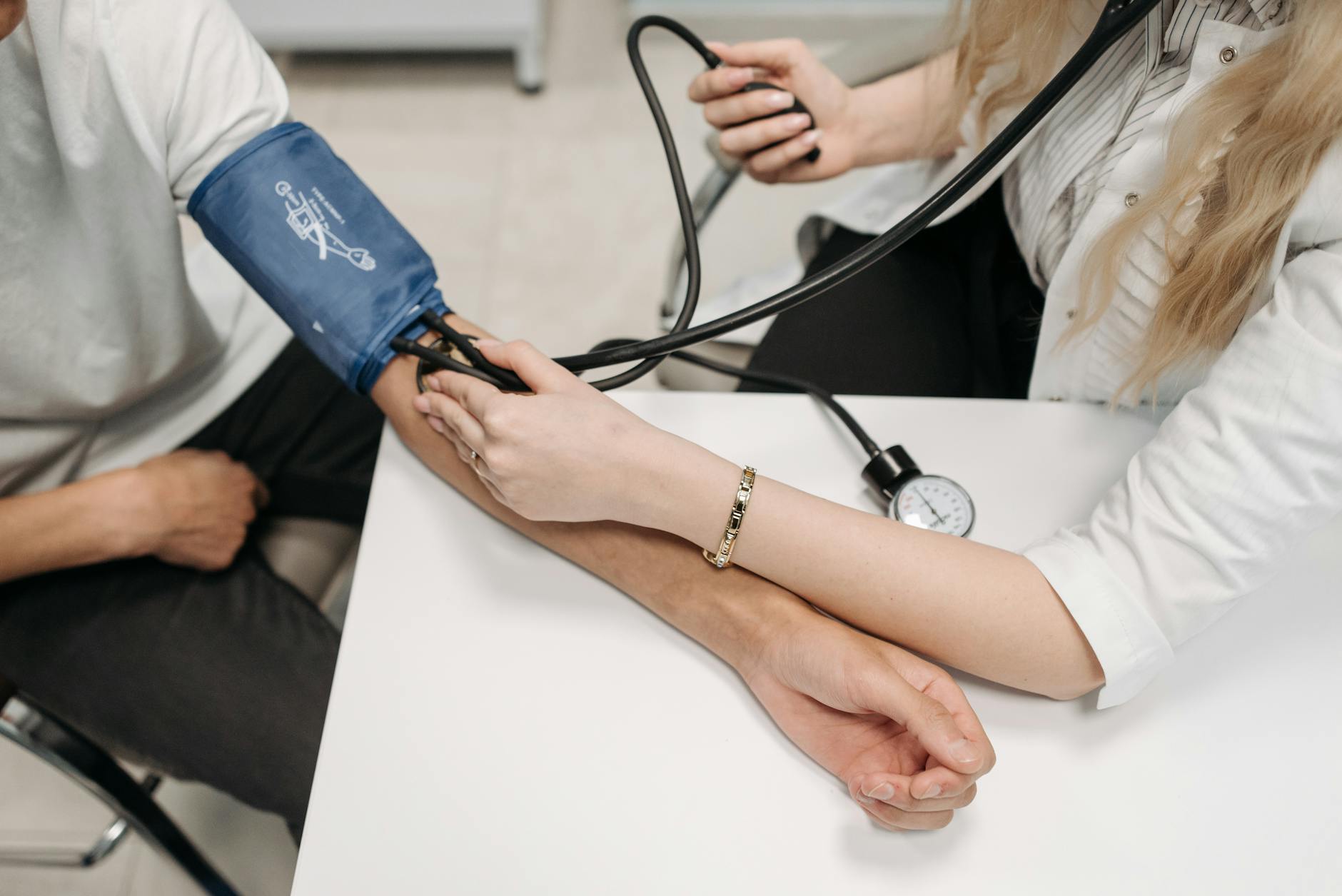
Diagnosis begins with a properly measured blood pressure reading using an appropriately sized cuff after 5 minutes of rest. A single reading >180/120 should be repeated in the opposite arm. If still elevated, the patient is in hypertensive crisis.
- BP ≥180/120 mm Hg
- No acute organ damage
- Treatment: restart home meds or oral BP‑lowering agent in clinic
- Discharge after BP stabilizes
- BP ≥180/120 mm Hg
- Organ damage confirmed (labs, imaging)
- Treatment: IV antihypertensives; ICU admission
- Goal: reduce BP by ≤25% in first hour
The emergency workup typically includes:
- Basic metabolic panel — creatinine, BUN, electrolytes (kidney injury).
- Complete blood count — thrombocytopenia may suggest thrombotic microangiopathy.
- Troponin and ECG — myocardial injury.
- Urinalysis — proteinuria, red cell casts (glomerular injury).
- Chest X-ray — pulmonary edema, widened mediastinum.
- CT or MRI brain — intracranial hemorrhage, edema.
- Fundoscopy — papilledema, retinal hemorrhages.
Immediate Treatment and Long‑Term Management
Treatment of a hypertensive crisis depends on whether it is an urgency or emergency. Never attempt to rapidly lower BP at home — this can cause stroke or heart attack.
In the emergency department (hypertensive emergency)
Long‑term management after a crisis
Patients who survive a hypertensive emergency are at very high risk for recurrence. The following strategies are essential:
- Medication adherence support — consider pill organizers, monthly refills, fixed‑dose combinations (e.g., perindopril/amlodipine).
- Home BP monitoring — measure twice daily (morning and evening) with a validated device; keep a log.
- Dietary sodium restriction — target <1,500 mg/day, emphasize DASH diet.
- Regular physical activity — 30 minutes moderate exercise most days.
- Substance use cessation — alcohol <2 drinks/day for men, <1 for women; complete avoidance of stimulants.
The DASH diet (Dietary Approaches to Stop Hypertension) has been shown to reduce systolic BP by 8–14 mm Hg in clinical trials. Combining it with sodium restriction can lower BP as much as a single antihypertensive drug.
Organ Damage From Uncontrolled Hypertension
Very high blood pressure damages blood vessels throughout the body. The organs most vulnerable are those with high flow and autoregulation: brain, heart, kidneys, eyes, and aorta.
| Organ | Acute injury | Chronic damage |
|---|---|---|
| Brain | Intracerebral hemorrhage, stroke, encephalopathy | Silent white matter lesions, cognitive decline |
| Heart | Myocardial infarction, acute LV failure | Left ventricular hypertrophy, heart failure |
| Kidneys | Acute kidney injury, glomerular necrosis | Chronic kidney disease, end‑stage renal disease |
| Eyes | Retinal hemorrhage, papilledema | Hypertensive retinopathy, vision loss |
| Aorta | Aortic dissection, rupture | Aneurysm formation |
Hypertensive encephalopathy can present with subtle symptoms: irritability, drowsiness, or confusion that may be mistaken for dementia. Always check BP in elderly patients with altered mental status.
Common Myths About High Blood Pressure Symptoms
Most people with hypertension — even stage 2 — have no symptoms. Chronic high BP is a “silent killer.” Symptoms appear only when pressure reaches crisis levels or after organ damage has occurred. Approximately 1 in 3 hypertensive adults are unaware they have the condition.
Feeling well does not rule out a hypertensive crisis. Many patients with readings >200/120 report no discomfort until a stroke or heart attack occurs. Only a cuff measurement can confirm.
While epistaxis can occur in hypertensive crisis, the association is weak. A 2025 systematic review found that only about 25% of patients presenting with nosebleeds had markedly elevated BP (≥160/100). Most nosebleeds are due to topical mucosal dryness or trauma.
Doubling a dose of most antihypertensives (especially long‑acting ones) does not produce an immediate effect and can cause dangerous hypotension later. Oral nifedipine short‑acting capsules (formerly used for urgent BP lowering) are now contraindicated because they can cause sudden, unpredictable drops leading to stroke or MI.
Frequently Asked Questions
Can anxiety cause my blood pressure to spike to 180/120?
Severe anxiety can transiently raise systolic BP by 20–30 mm Hg, but sustained readings of 180/120 are rarely due to anxiety alone. If you have a pressure of this magnitude, you should be evaluated for an underlying medical cause. Panic attacks can mimic hypertensive crisis symptoms (chest pain, palpitations, shortness of breath), but it is safer to assume a medical emergency until proven otherwise.
What should I do if my home monitor reads 190/110?
Sit quietly for 5 minutes and repeat the measurement. If it remains ≥180/120 and you have no symptoms, call your doctor’s office for guidance. If you have any symptom (headache, vision change, chest pain, weakness), go to the emergency room immediately. Do not drive yourself — ask someone to drive or call 911.
How quickly can very high blood pressure cause organ damage?
Damage can occur within hours. In acute hypertensive encephalopathy, cerebral edema develops over 12–24 hours. Aortic dissection can happen in minutes. The longer the pressure remains uncontrolled, the greater the risk. Timely treatment — within the first 60 minutes — dramatically reduces mortality.
Is ischemic stroke more common than hemorrhagic stroke in hypertensive crisis?
Both occur, but intracerebral hemorrhage is more specifically associated with extreme BP elevations because the fragile penetrating arteries rupture under high pressure. However, severe hypertension also accelerates atheromatous plaque rupture, causing ischemic stroke. The 2024 AHA/ASA guidelines note that BP >220/120 in acute ischemic stroke requires careful titration to maintain perfusion.
Can children have symptoms of very high blood pressure?
Yes, though pediatric hypertension is less common. Symptoms in children include severe headache, vomiting, blurred vision, seizures, or Bell’s palsy. Underlying causes (renal artery stenosis, coarctation of aorta, renal parenchymal disease) are more frequent than in adults. A child with BP >95th percentile for age/height plus symptoms requires emergency evaluation.